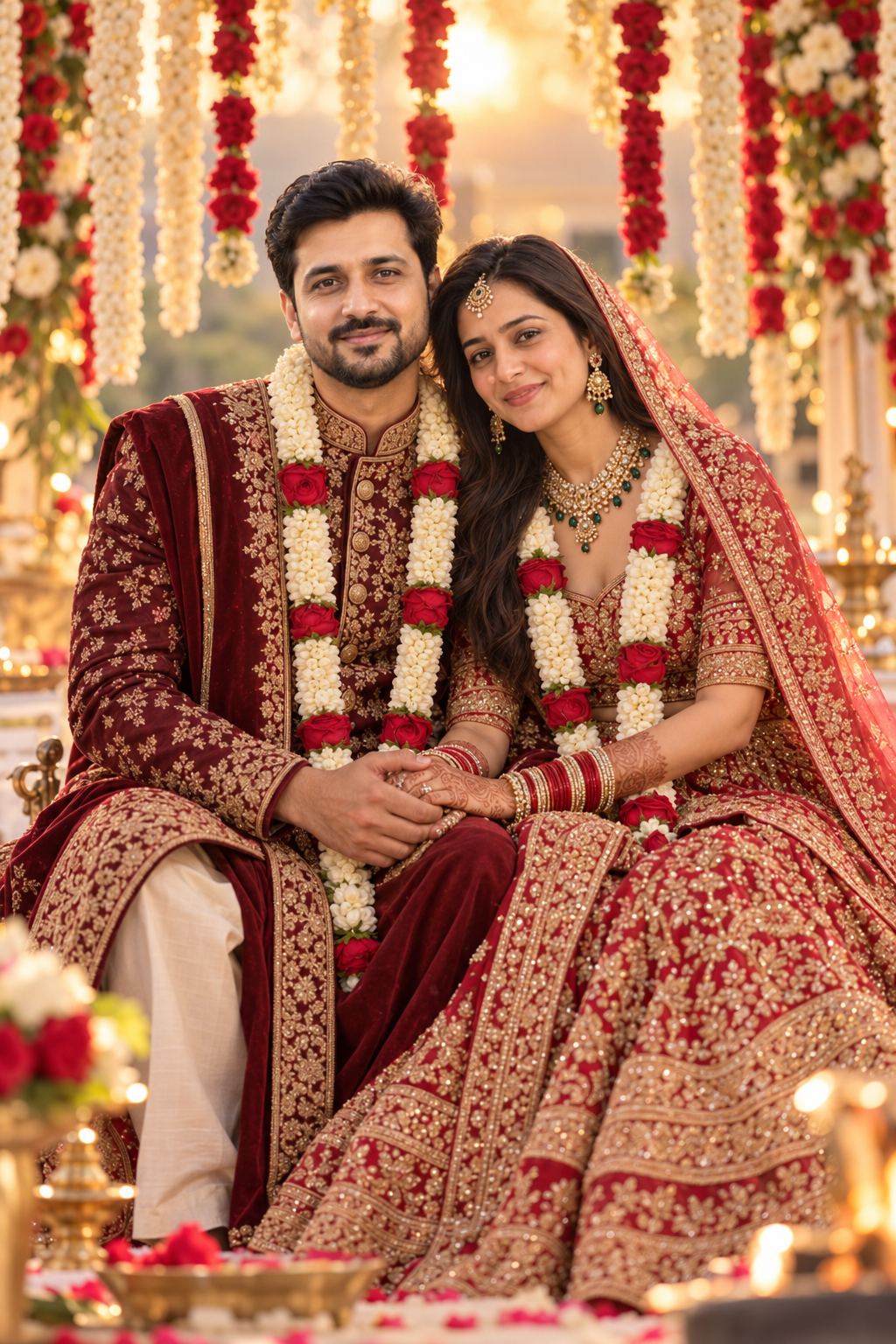
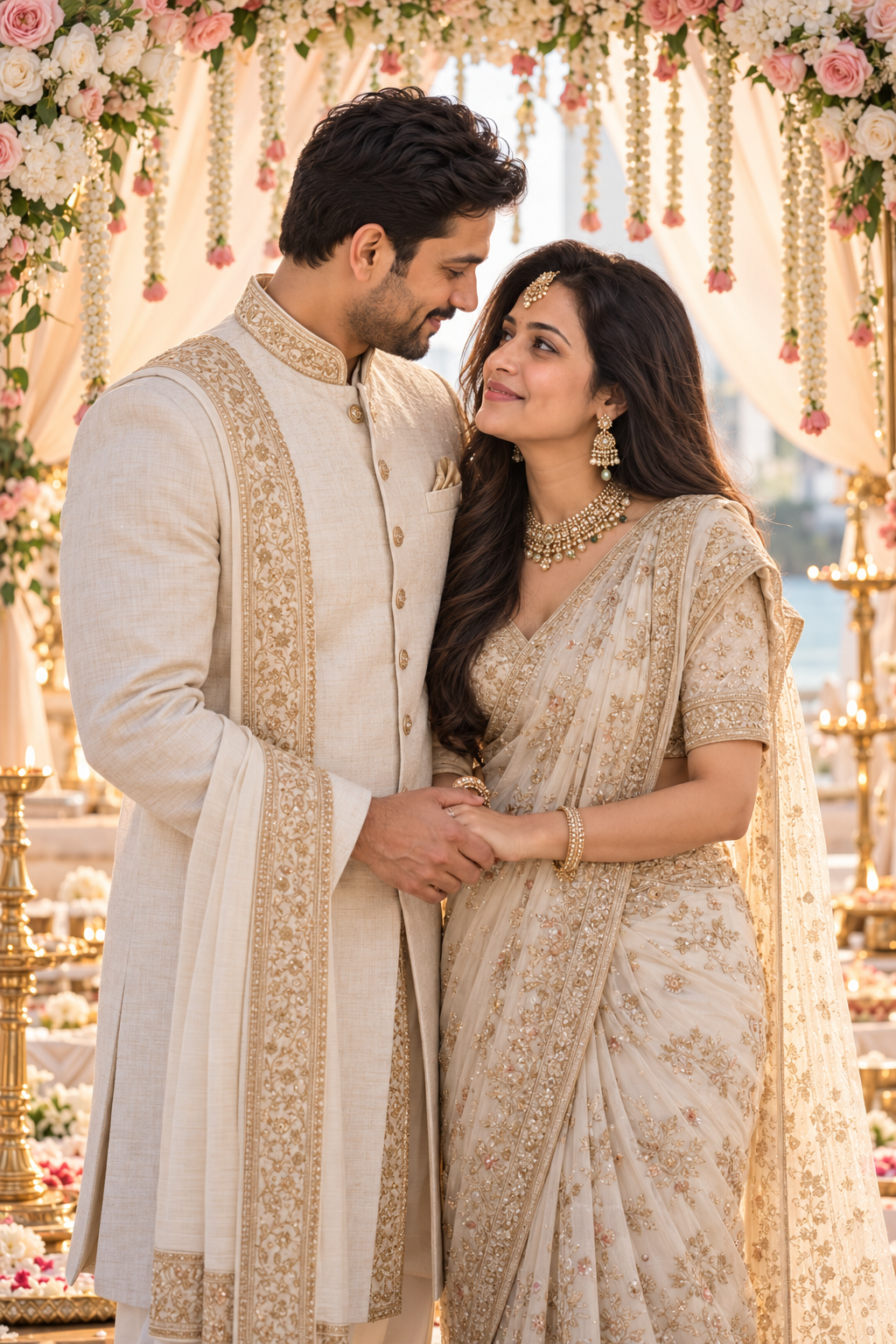
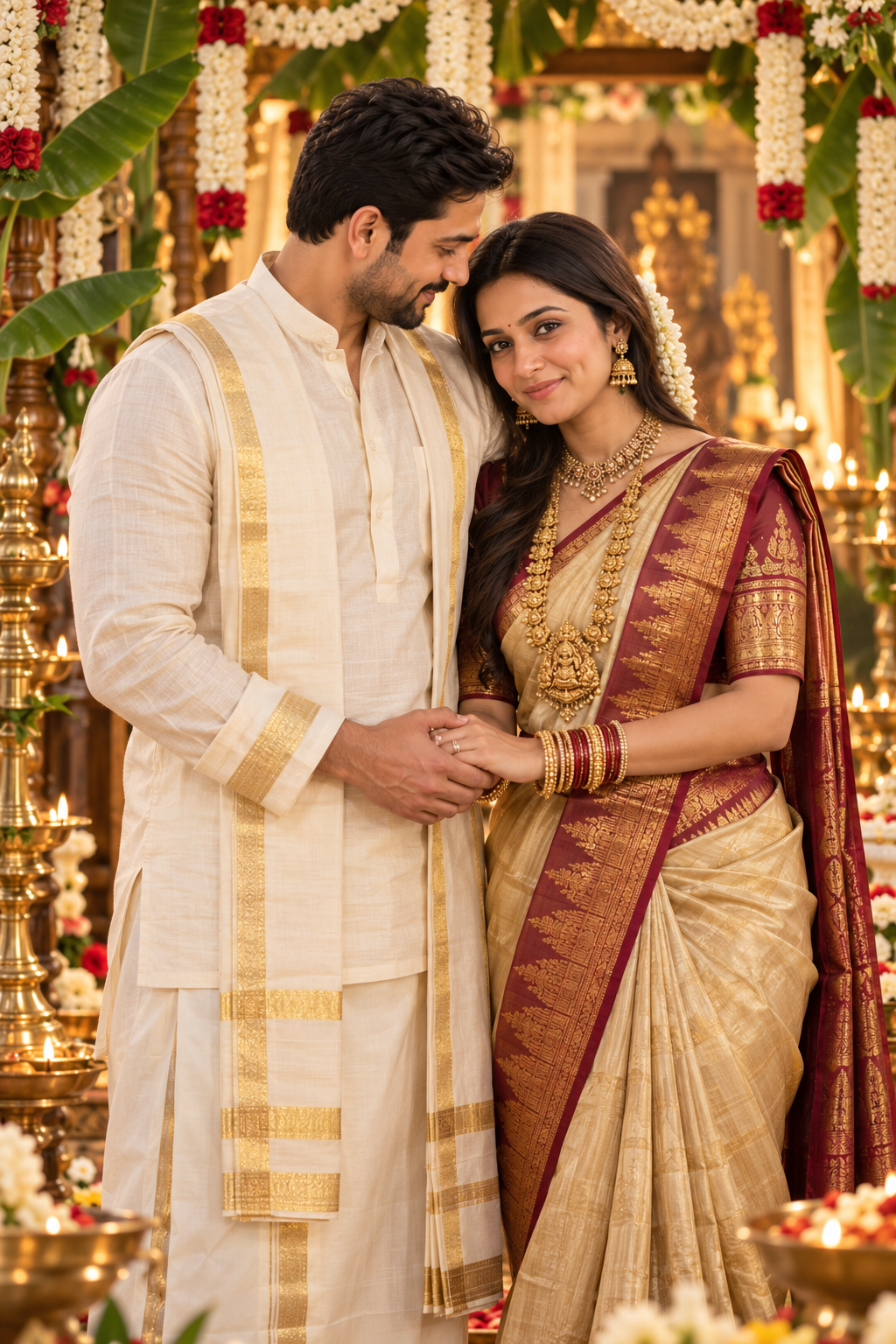
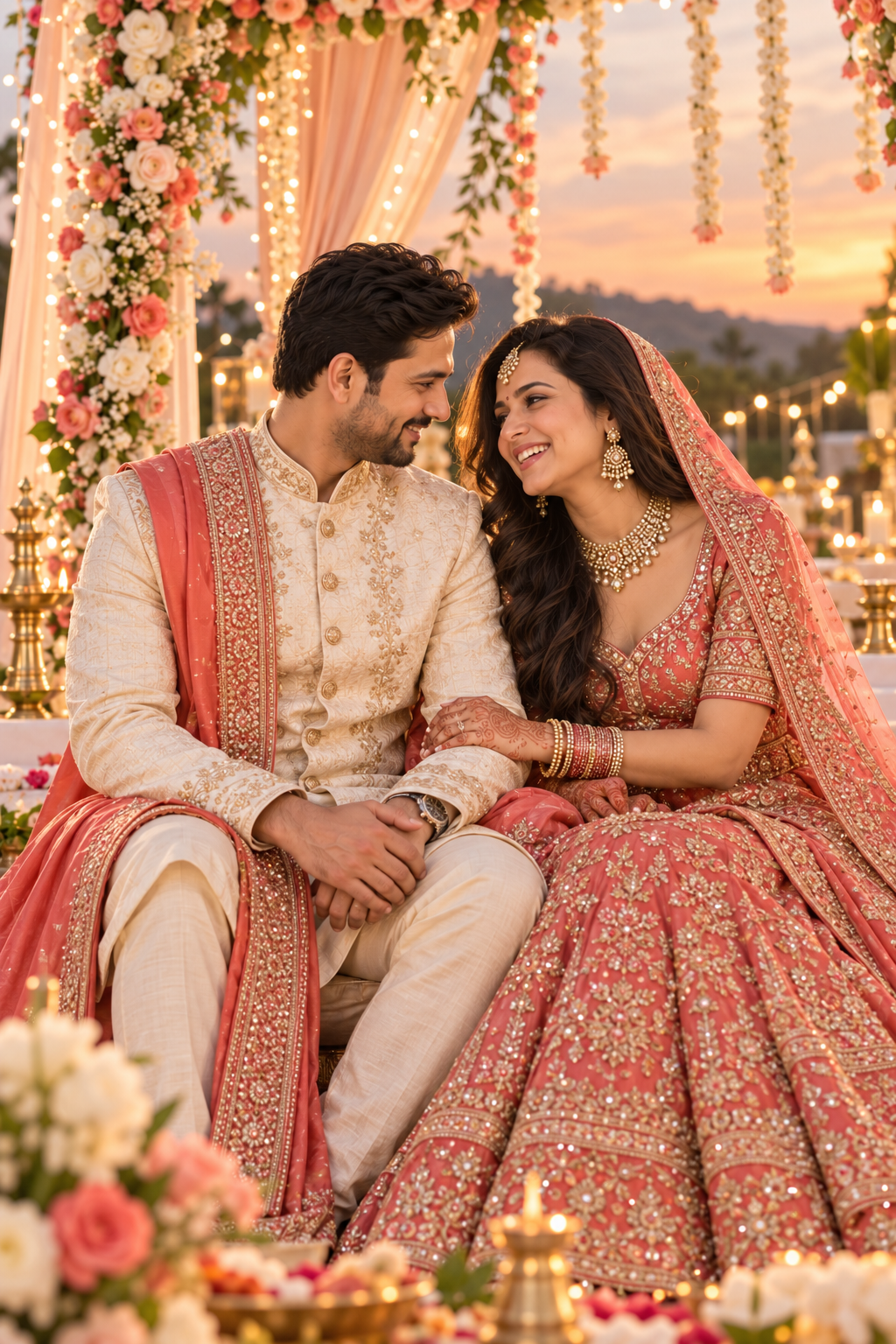
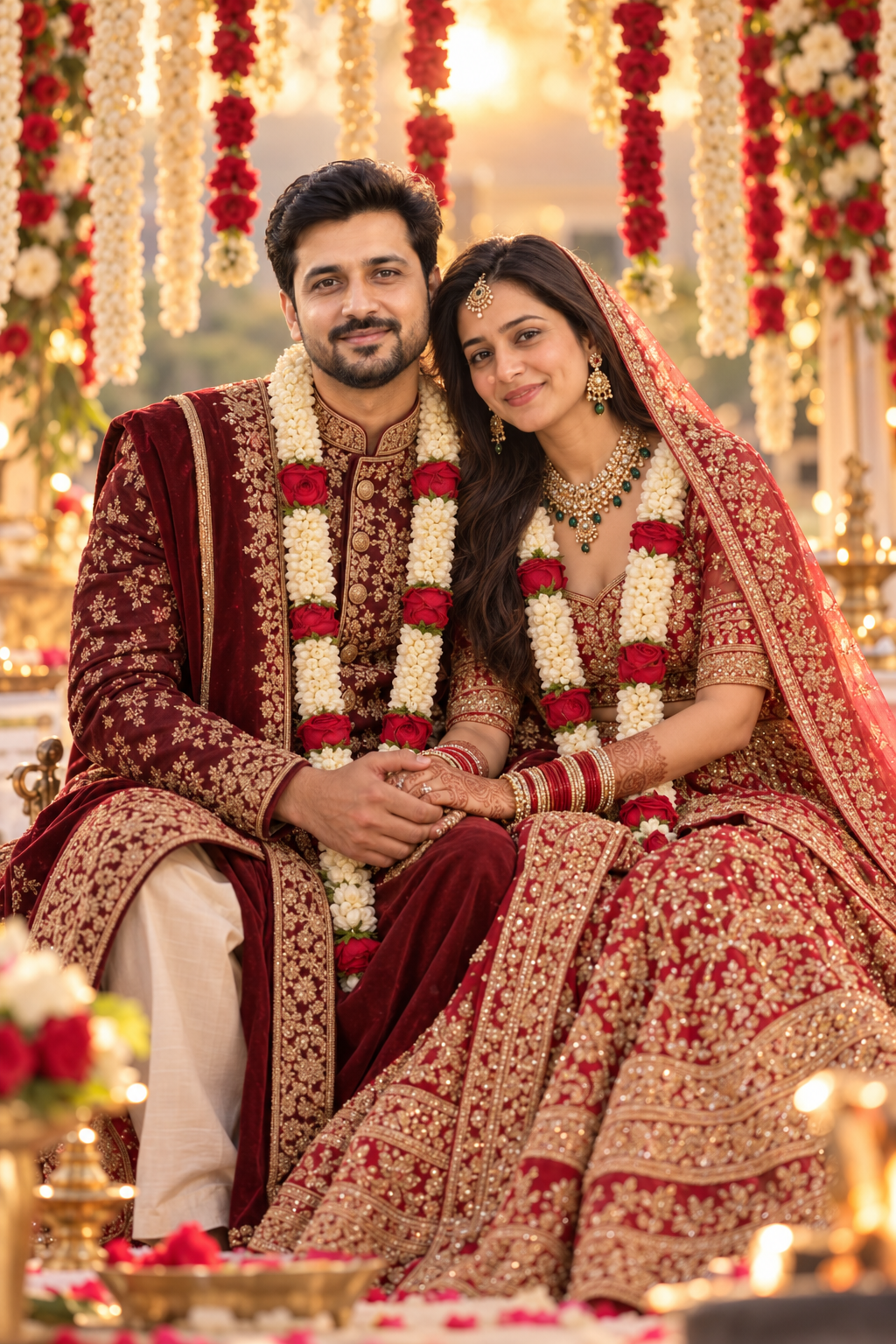
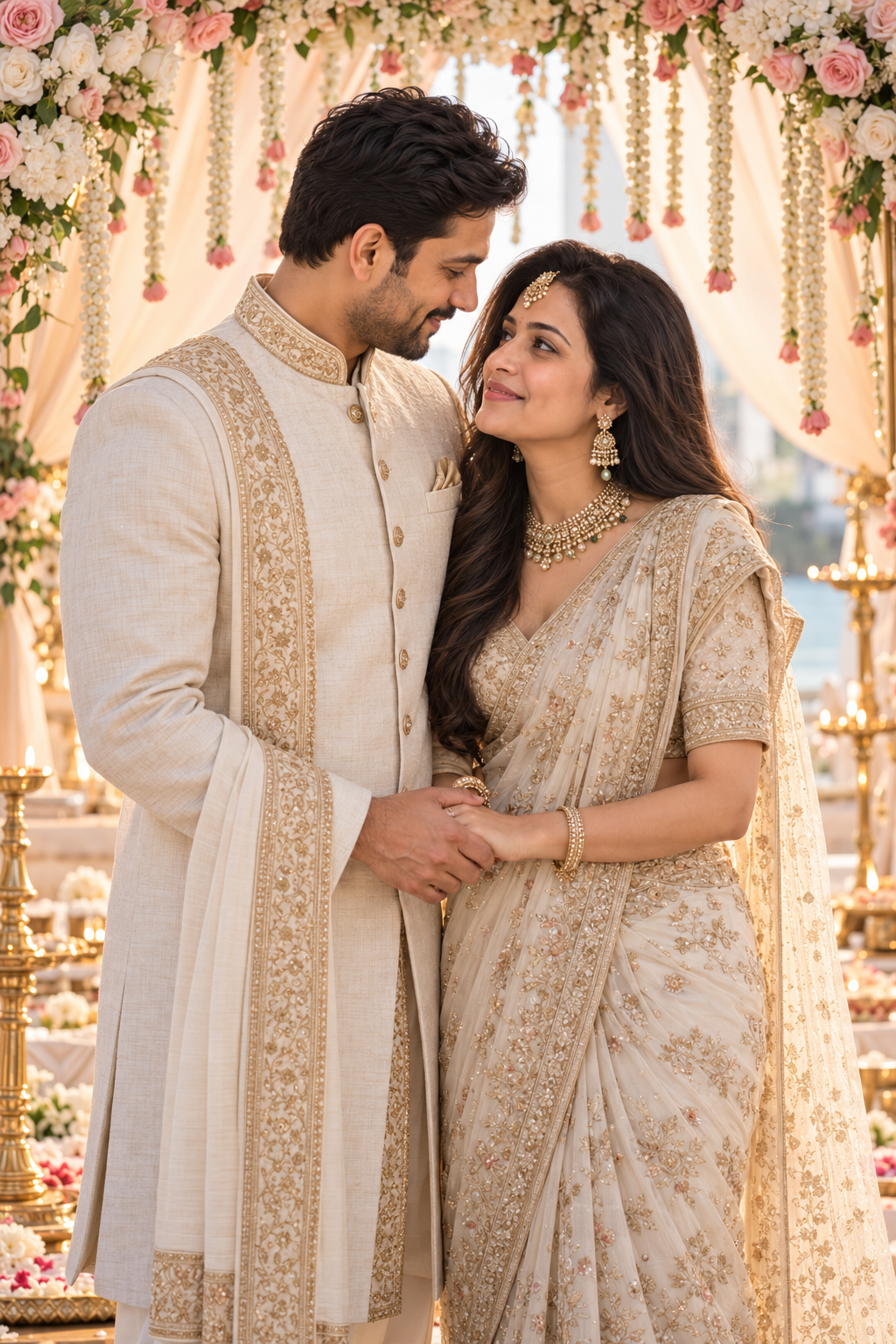
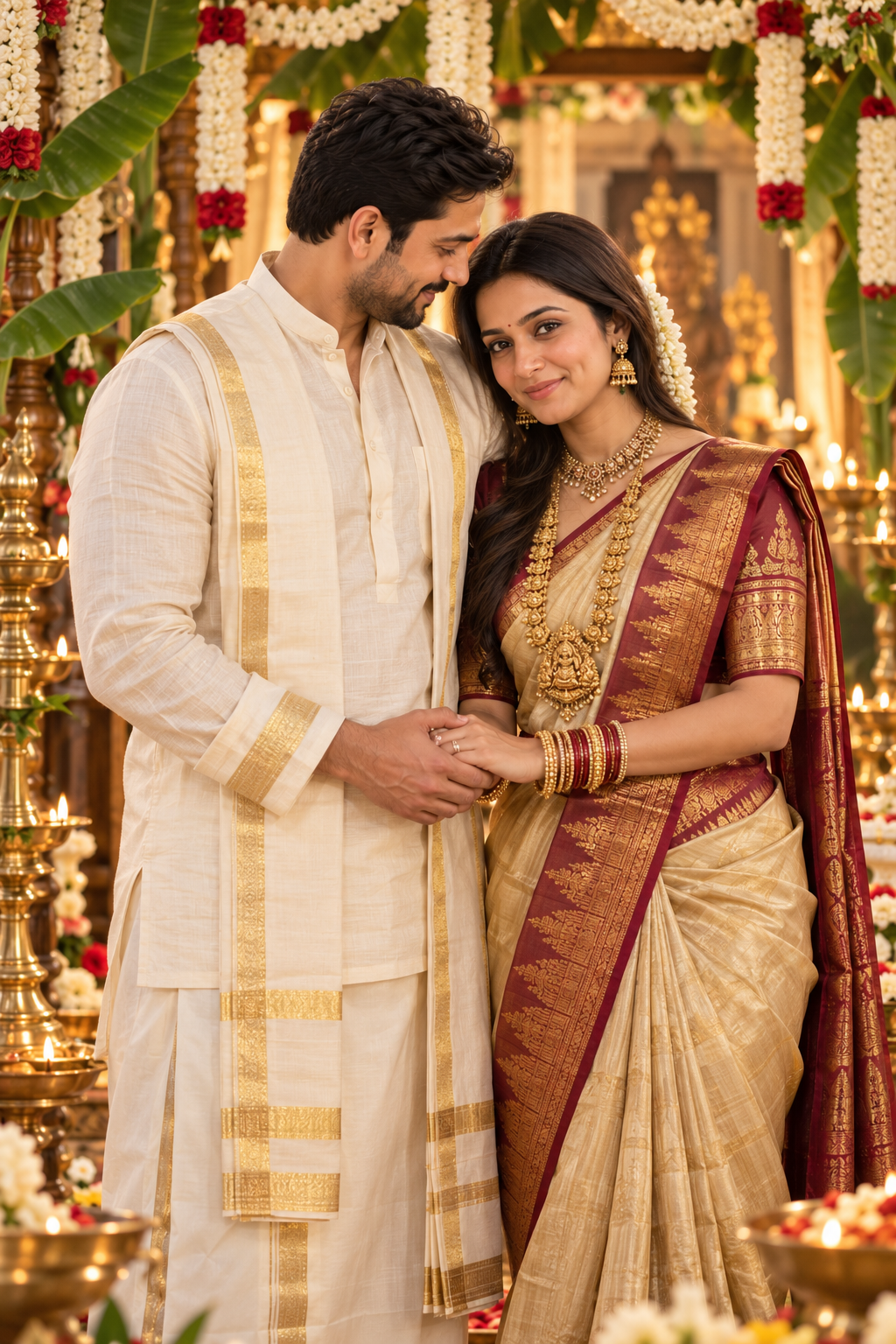
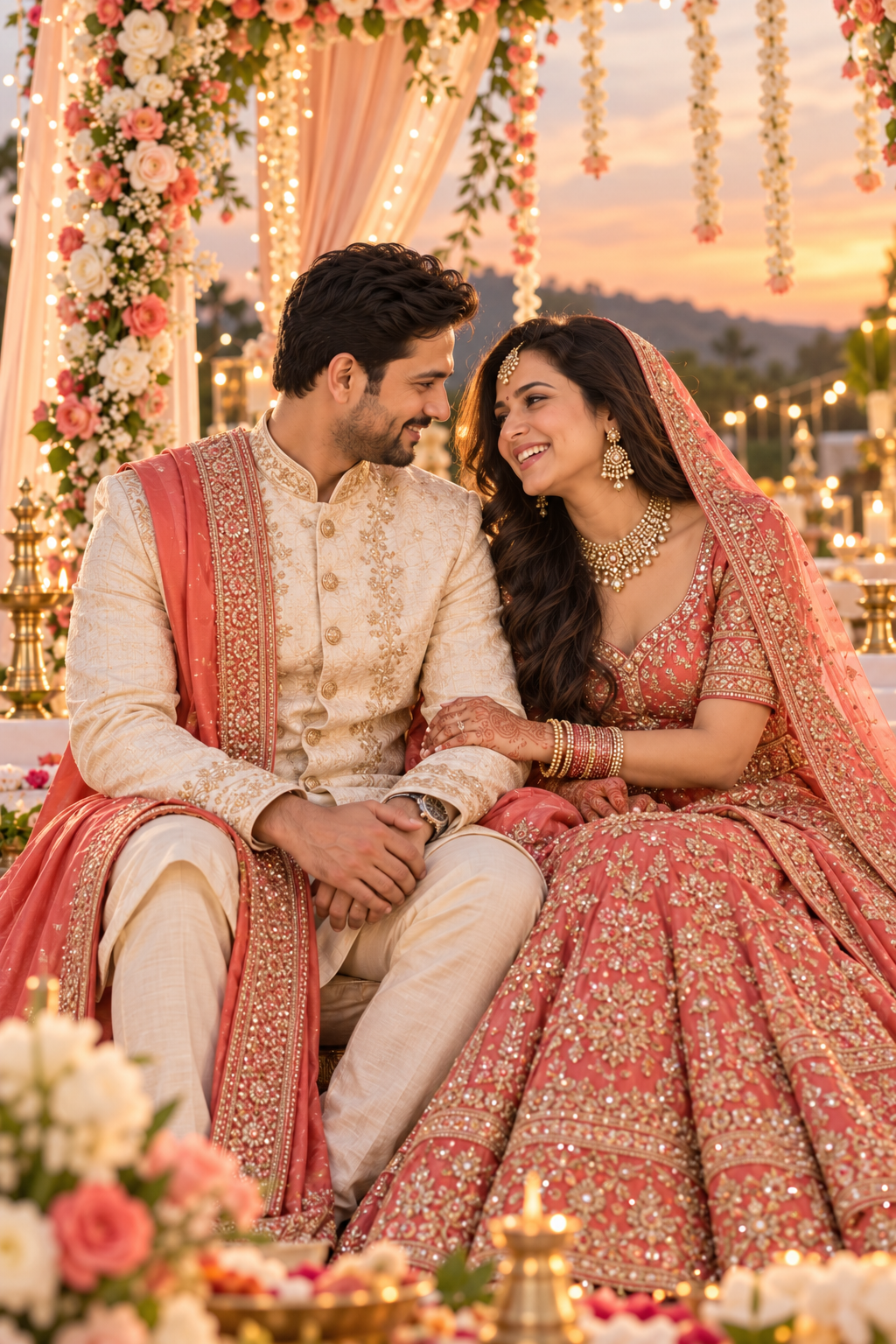
Create a rich, editorial-caliber traditional Indian wedding portrait of the couple seen in the provided reference photos, maintaining their identity, body proportions, skin tone, and facial features exactly—no changes to their natural likeness.
Clothes and Style:
The bride should be dressed in a traditional silk saree or an elaborately embroidered wedding lehenga with exquisite zari, resham, or gota-patti work in shades of rich crimson, maroon, and antique gold. The dupatta should be draped elegantly. Wear her traditional bridal accessories, such as a bold maang tikka, jhumkas, a set of layered necklaces, bangles, and hands embellished with mehndi. Make sure the color scheme complements the bride's ensemble while dressing the groom in an elegant sherwani or bandhgala with delicate embroidery details, a matching dupatta or stole, a traditional pagri or safa (turban), and traditional juttis.
Configuring:
The couple should be positioned behind a lavishly decorated mandap with delicate floral draperies, fresh marigold and rose garlands, and warm brass or diya lamps that provide a gentle ceremonial glow. To increase realism, use delicately carved mandap pillars or backdrops made of traditional textiles.
Pose and Expression:
Instead than facing the camera directly, have the pair sit or stand near to one another in a natural, intimate position with their hands gently clasped or their foreheads lightly touching. They should also share a warm, sincere smile or soft glance. Record genuine, natural feeling that reflects their relationship.
Color and Lighting:
Avoid harsh shadows and overexposure by using ambient lamp light in conjunction with soft, diffused ceremonial lighting that resembles golden-hour radiance. For an opulent yet realistic tone, use deep crimson, maroon, antique gold, ivory, and delicate floral elements in the color scheme.
Camera and Technical Quality:
With a narrow depth of field, mimic the appearance of an 85mm portrait lens while maintaining sharp focus on the pair while subtly blurring the mandap backdrop. Make sure that jewelry, embroidered threadwork, and fabric textures (such as silk shine, brocade patterns, and floral decorations) are all incredibly realistic. Hands should have a natural, well-formed appearance.
Standard of Output:
The finished picture should showcase high-end, editorial-caliber Indian wedding photography, complete with print-ready resolution, sophisticated color grading, and genuine emotion, style, and cultural detail.