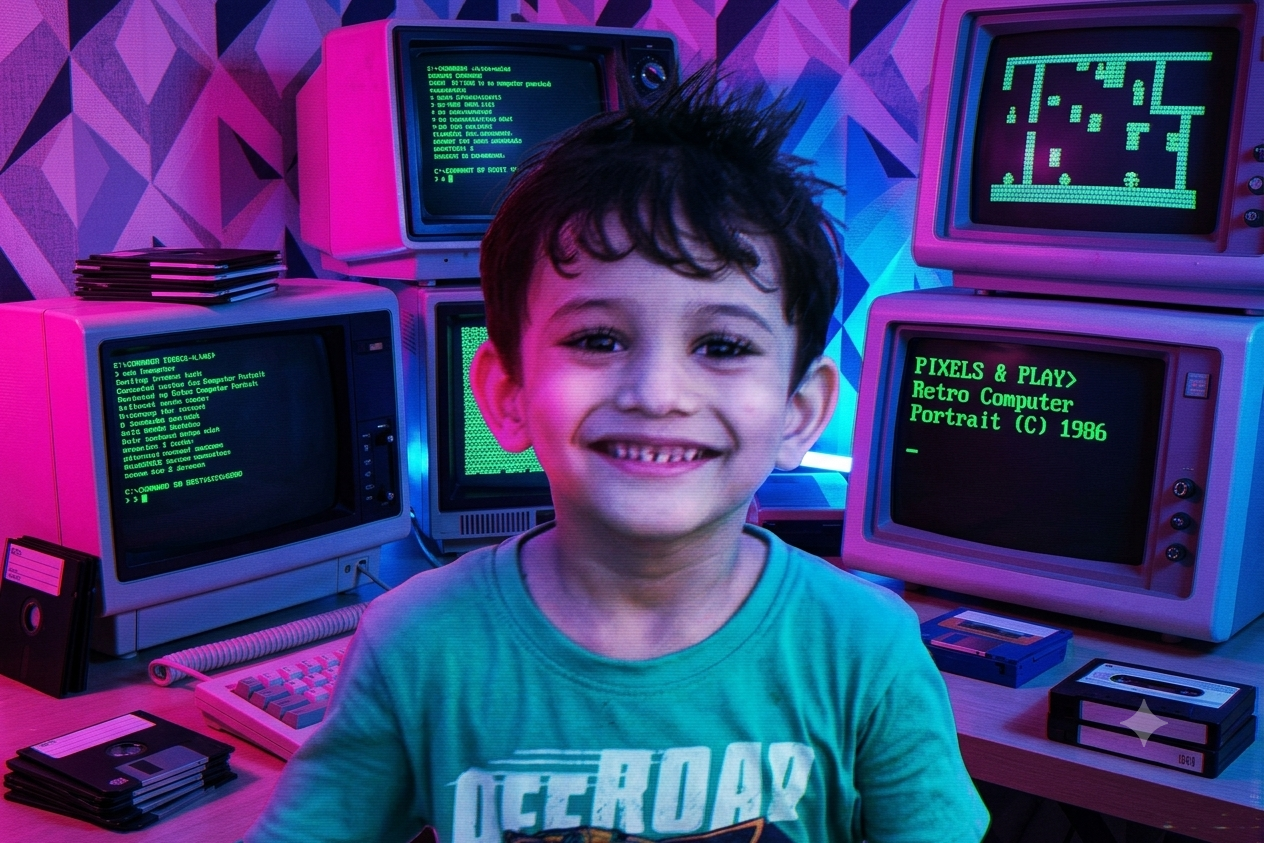
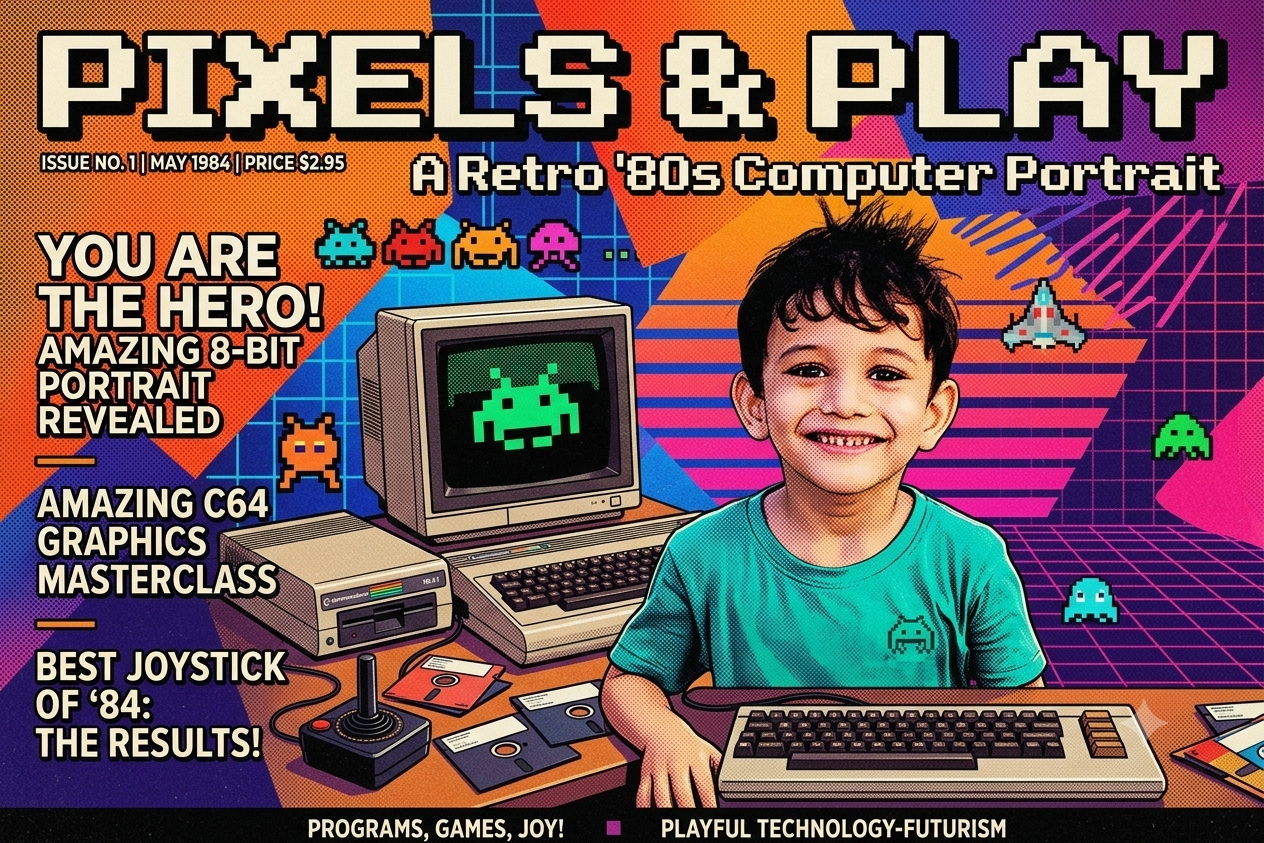
The child's natural facial features, expression, dimensions, hair color/style, and skin tone should all be authentically preserved in the supplied reference photo; the likeness should not be styled or changed.
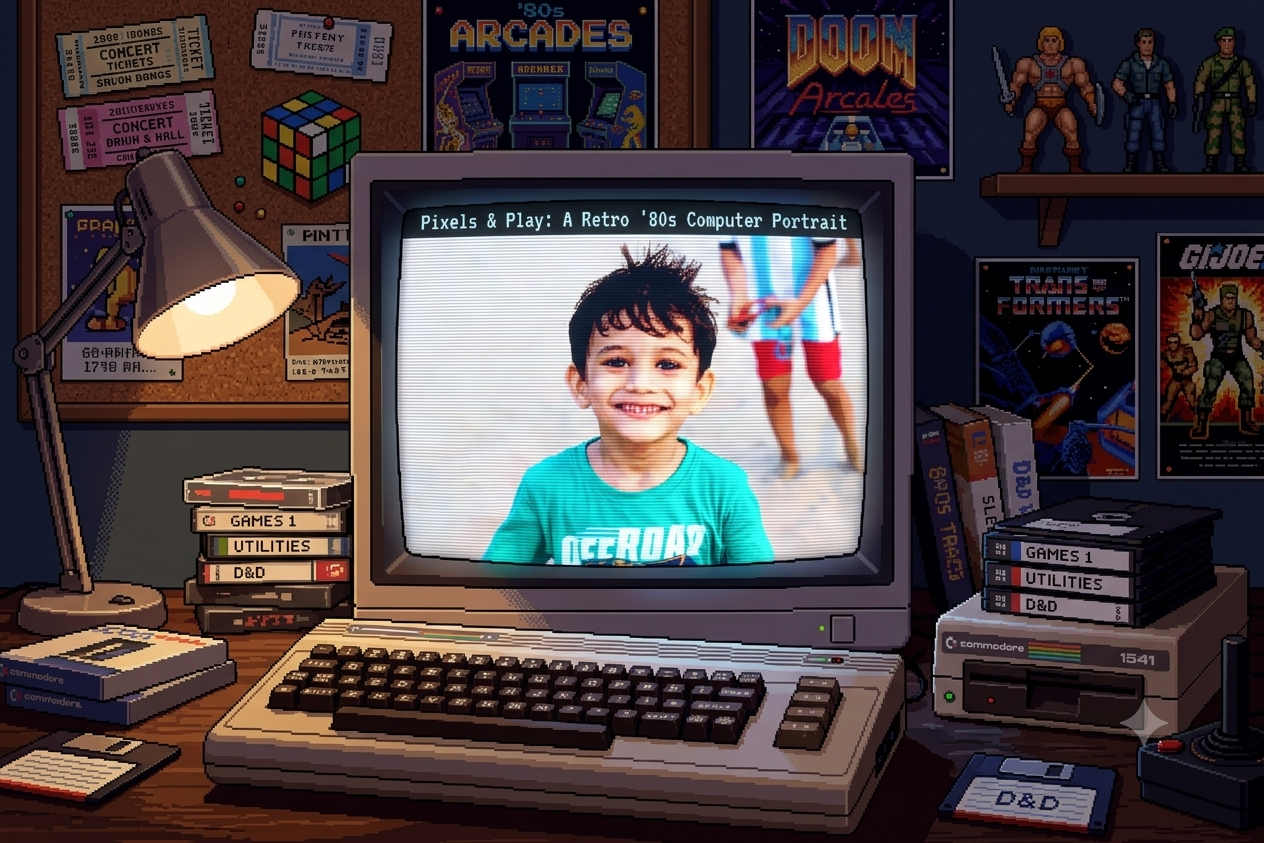
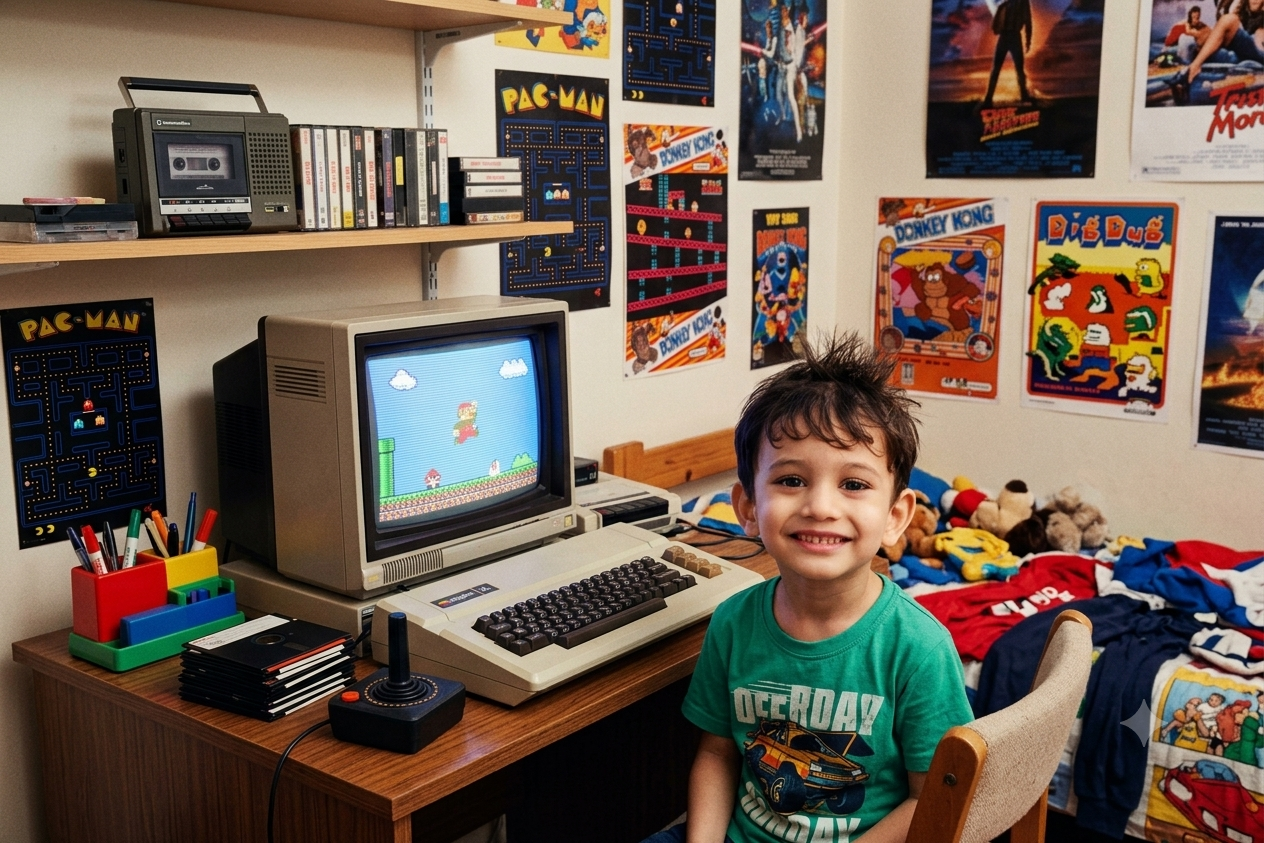
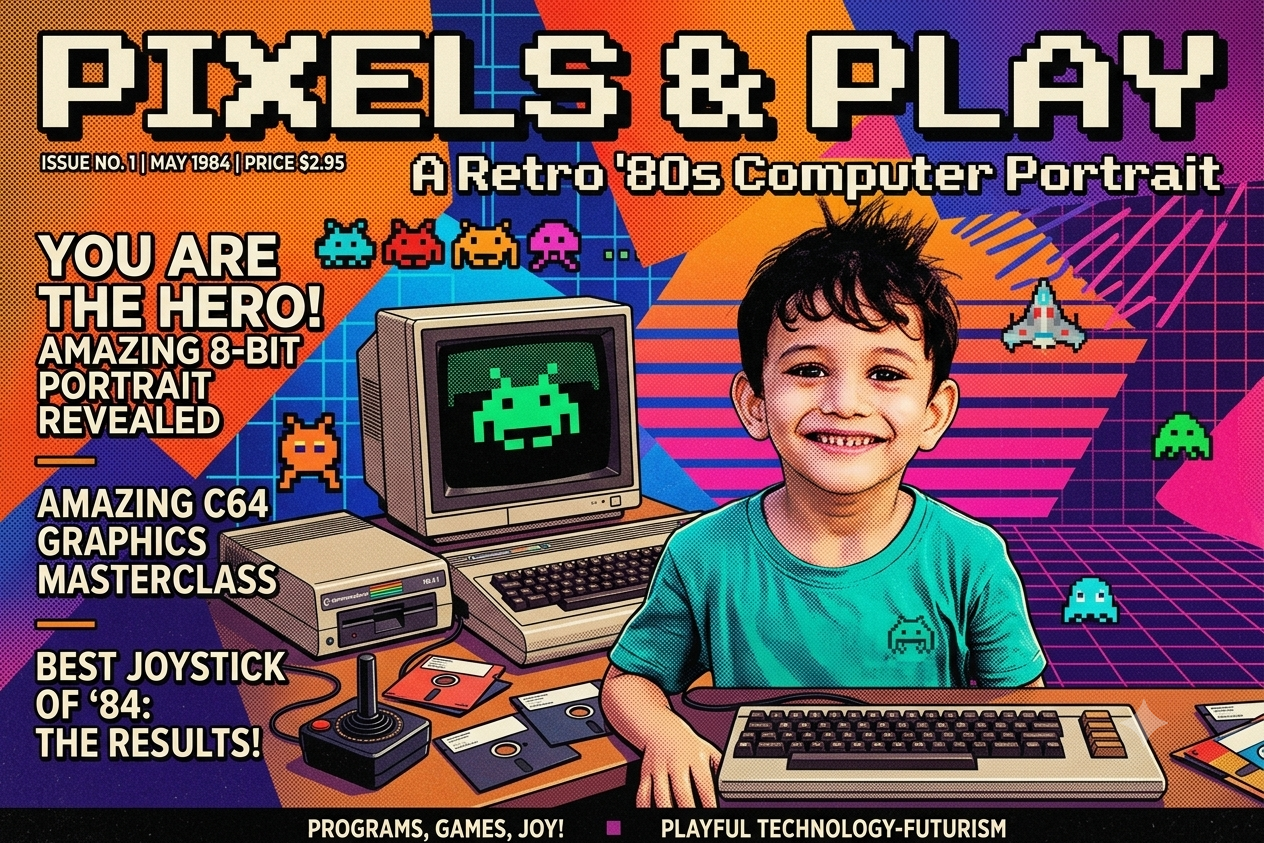
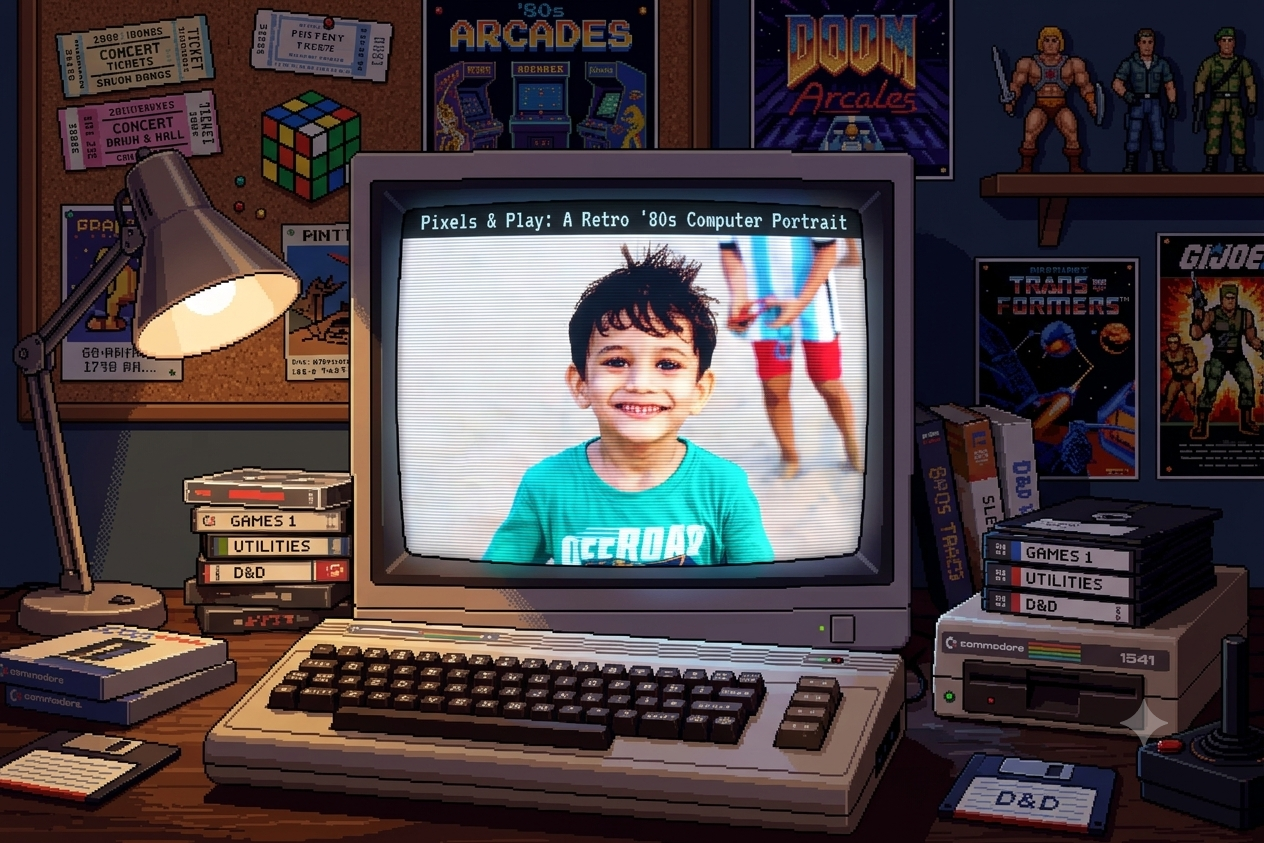
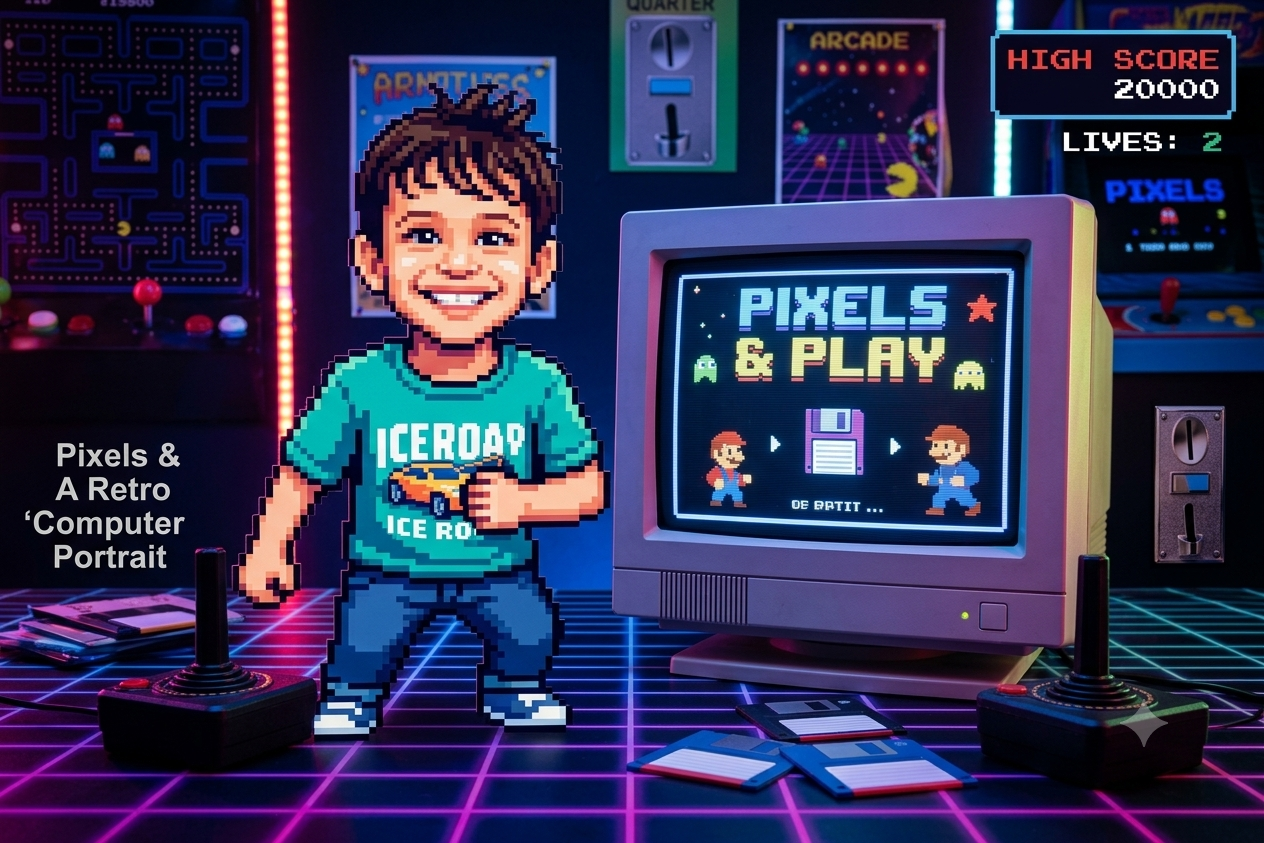
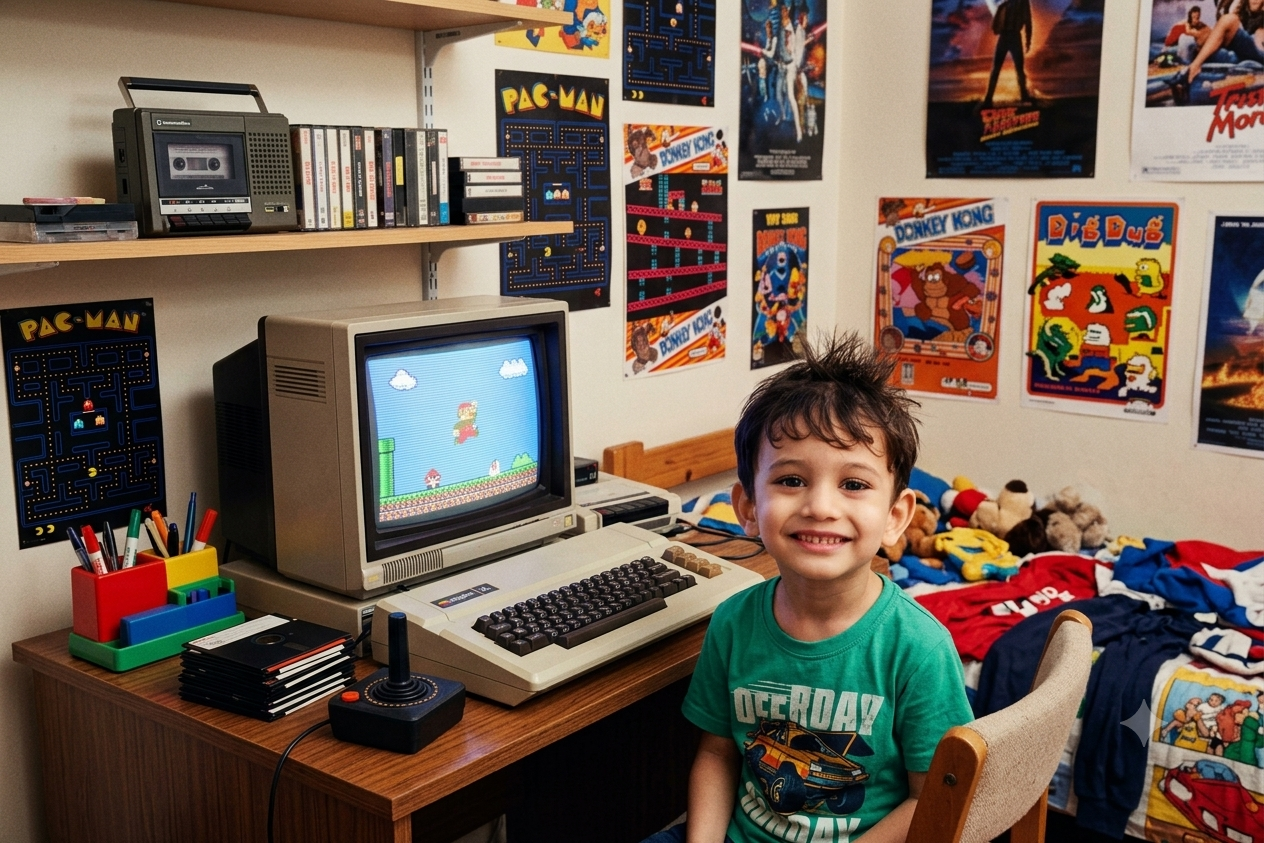
Imagine the toddler sitting excitedly at a bulky personal computer from the 1980s, equipped with a mechanical keyboard with big tactile keys and a boxy beige CRT monitor. Leaning slightly forward, hands close to the keys, and eyes full of excitement as though they are discovering something fascinating on screen are all signs of keen engagement.
Clothes: Put on a traditional striped polo shirt, well-fitting jeans, and retro-style sneakers (leather or canvas, in hues like white, red, or navy).
Set dressing: Add some nostalgic clutter to the desk, such as a small stack of 5.25" or 3.5" floppy disks, a few spiral notebooks with doodles, colourful stationery (pencils, erasers, and a rotary desk organiser), and maybe a desk lamp or coiled phone wire for some period flair.
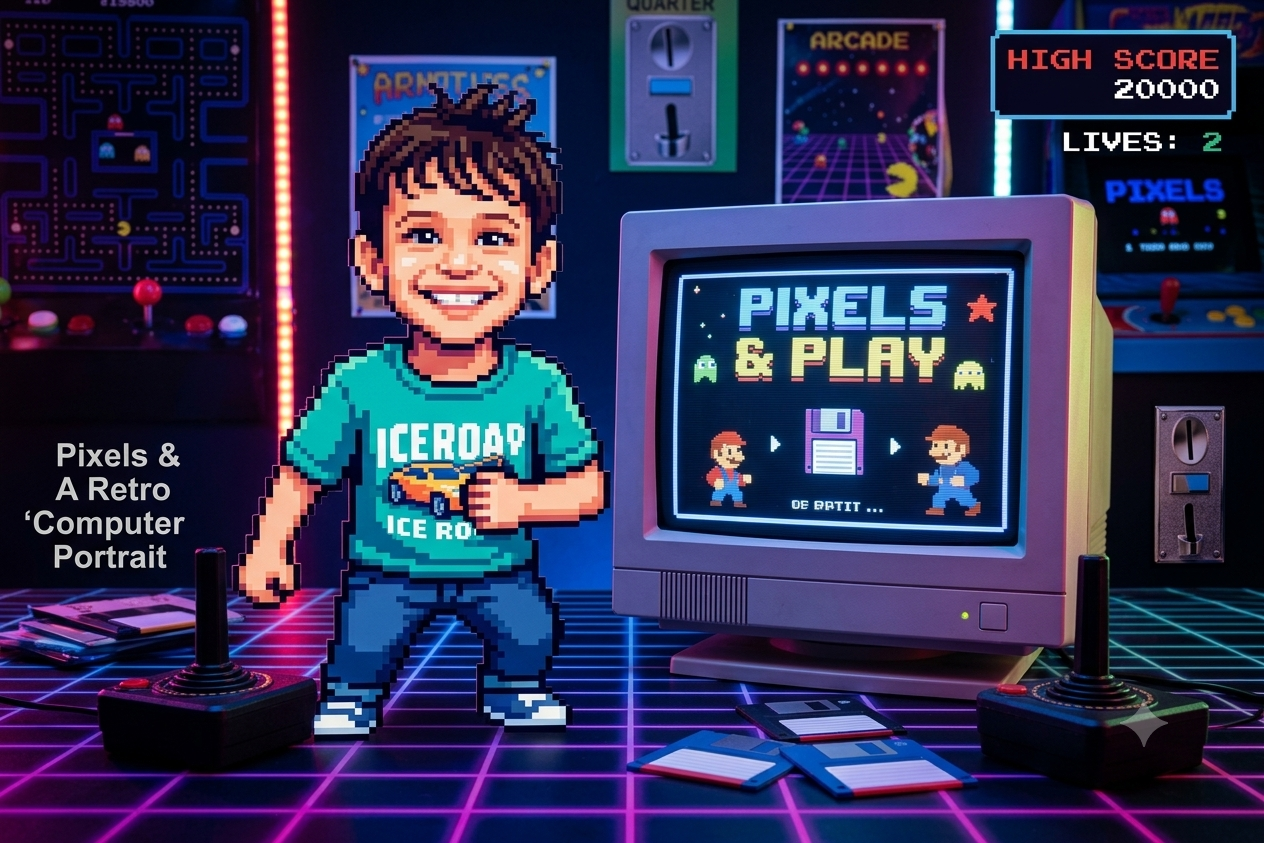
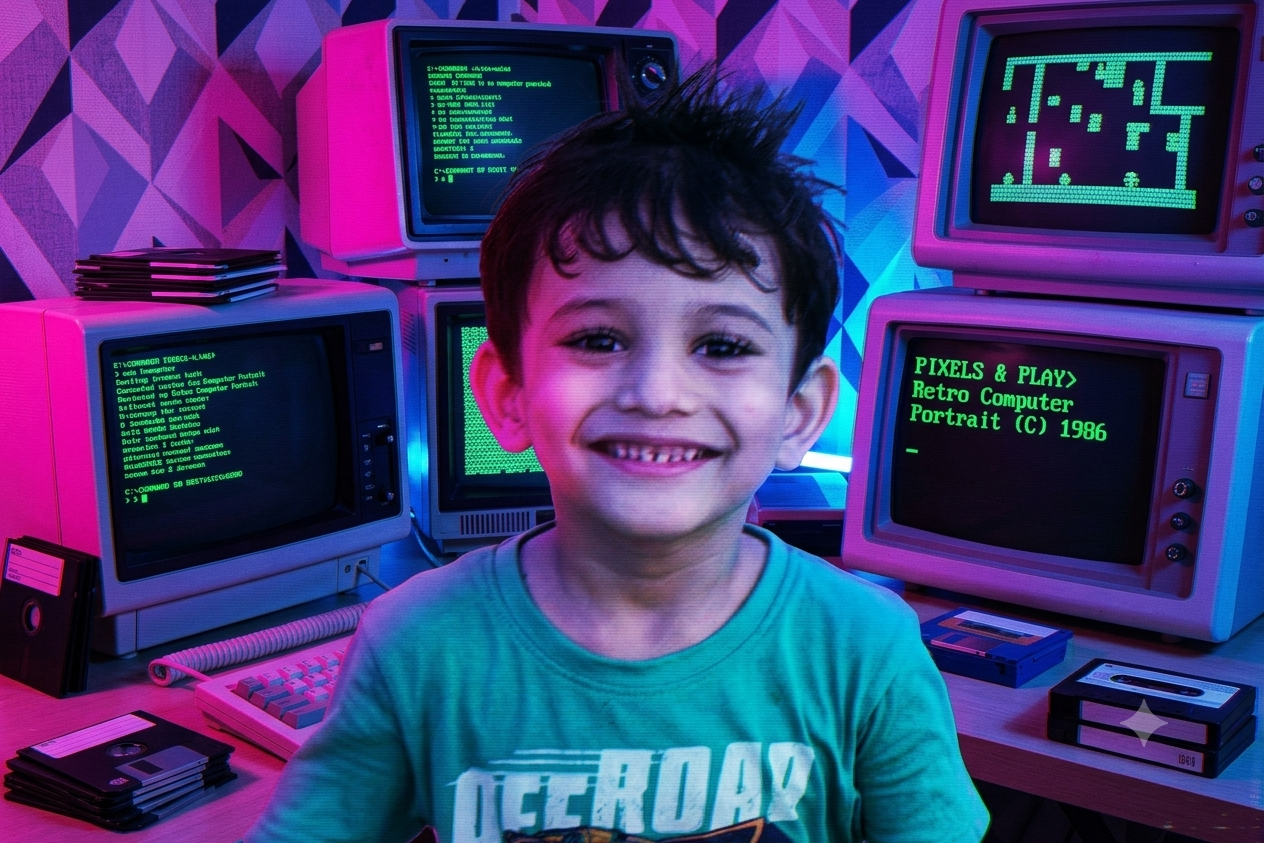
Screen content: Given the display constraints of the 1980s, the CRT monitor should show straightforward pixel-art images or a simple green/amber text interface that suggests an early video game or programming exercise. Nothing too complicated.
Lighting and ambience: To create a private, concentrated atmosphere, utilize warm, comfortable desk lighting, such as a soft bulb glow blending with the faint blue-white light of the monitor. To create a realistic old photo vibe, use a faint analogue-film texture (light grain, slightly muted colour grading, soft vignette).
Overall mood: The finished picture should exude curiosity, ingenuity, and inventiveness, evoking a timeless feeling of amazement at the start of the personal computer era.