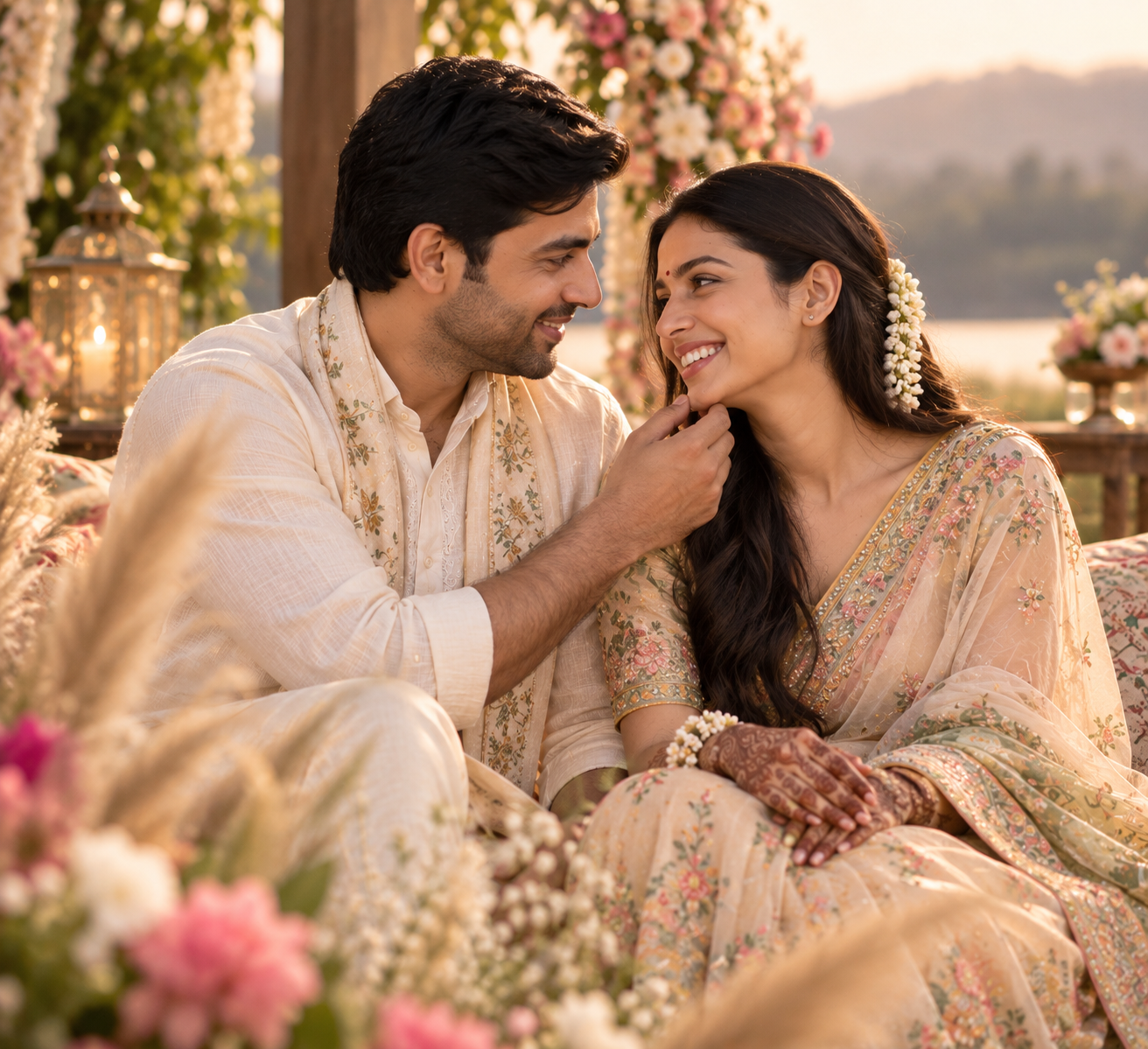
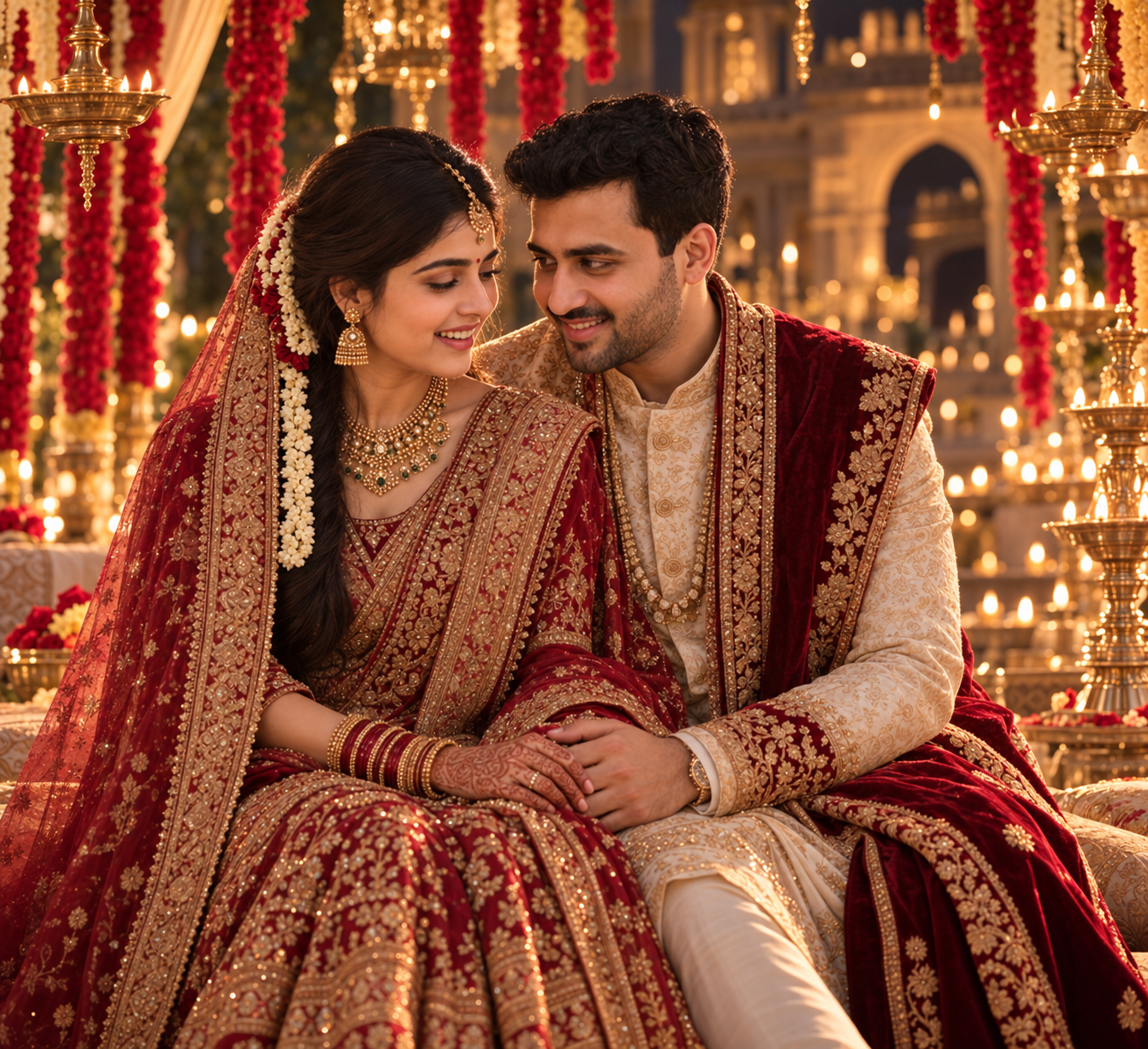
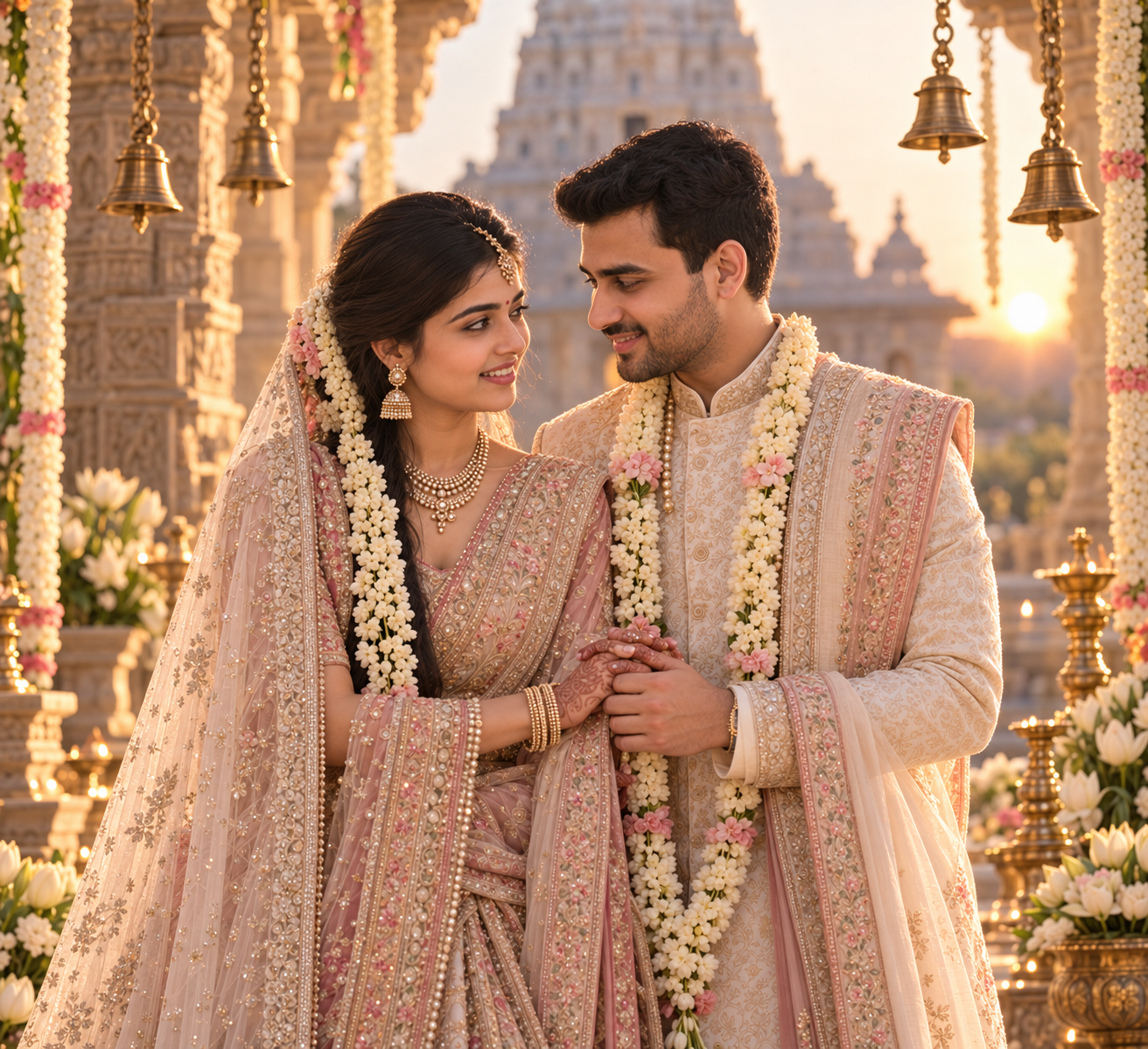
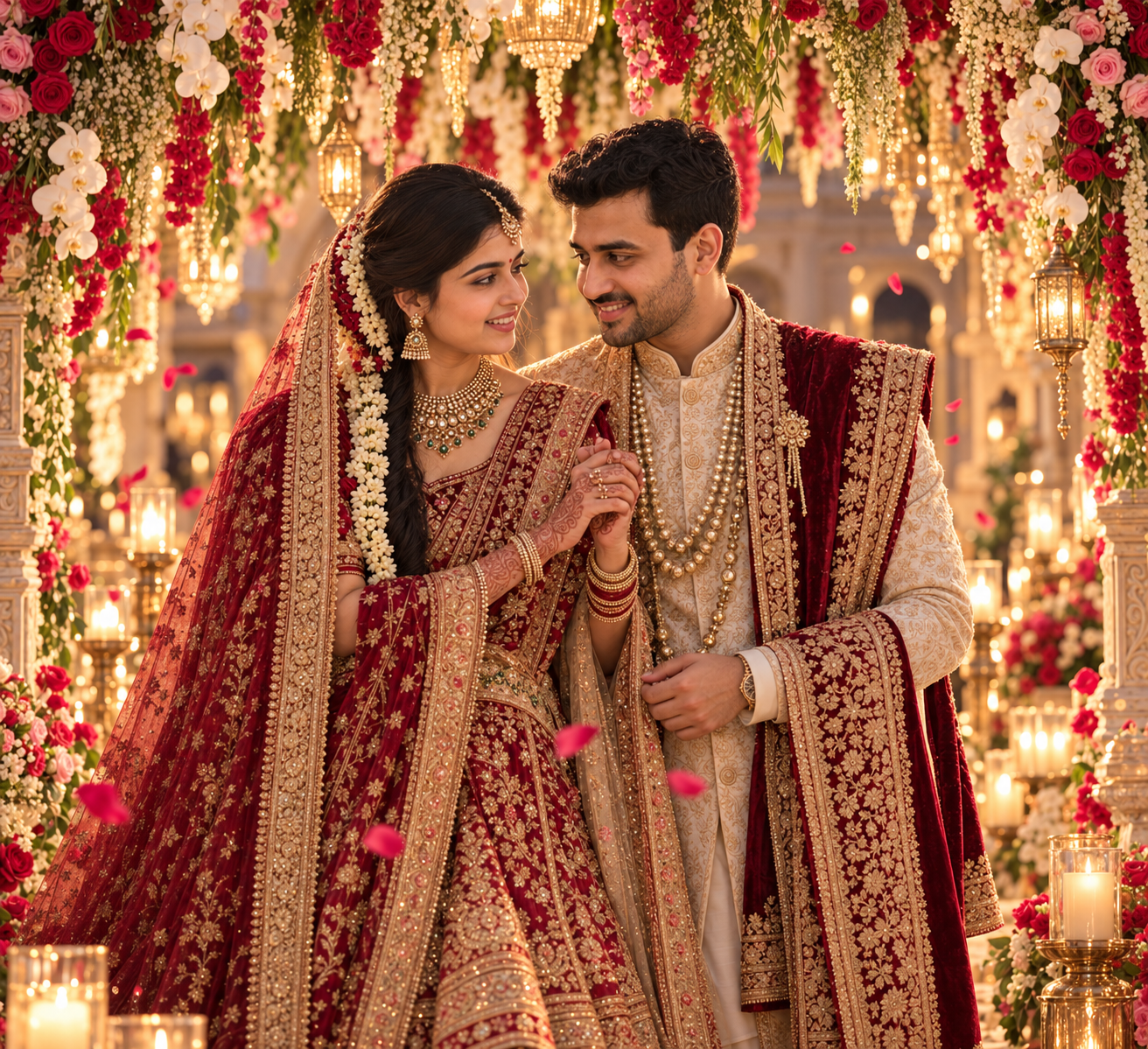
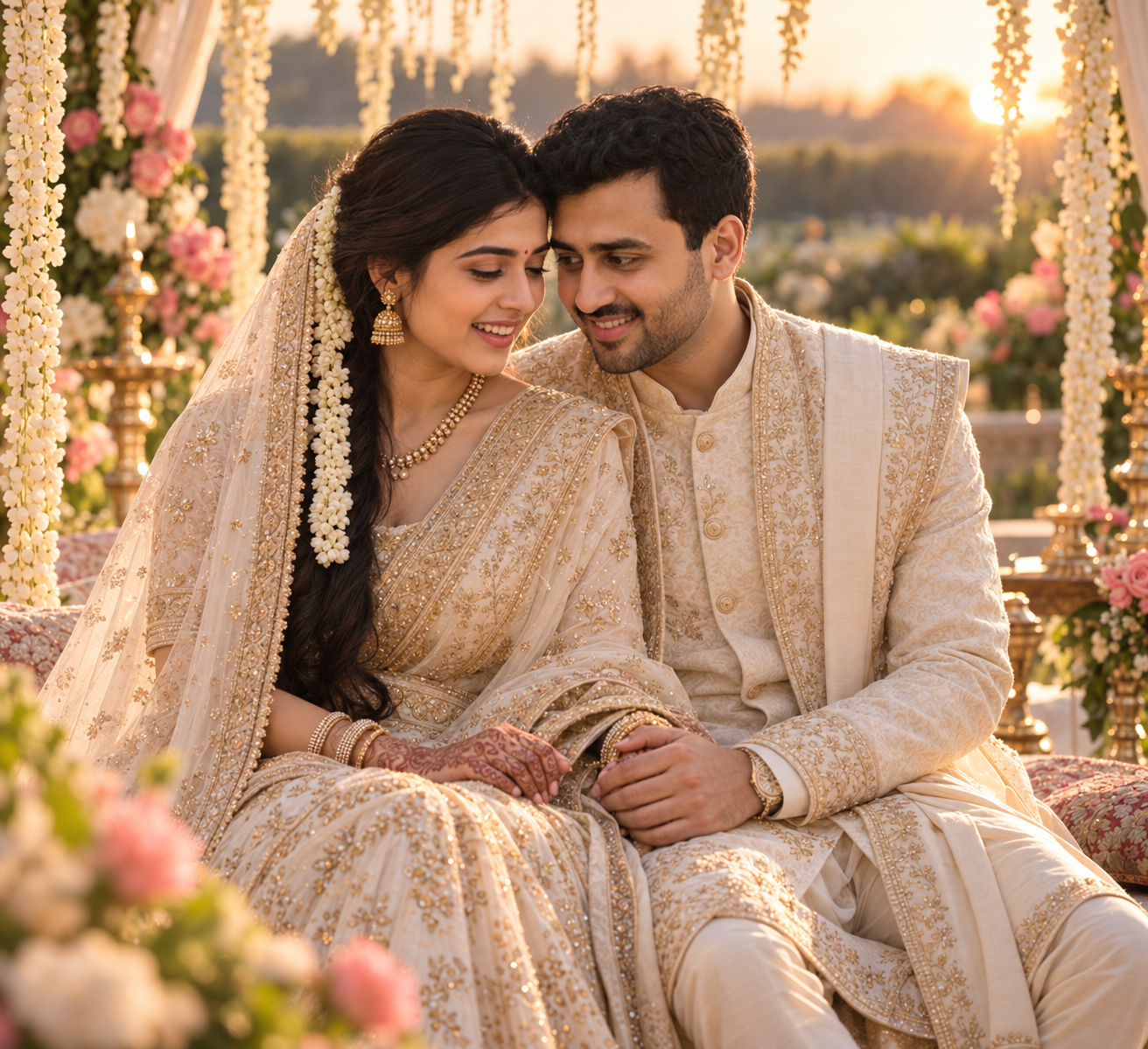
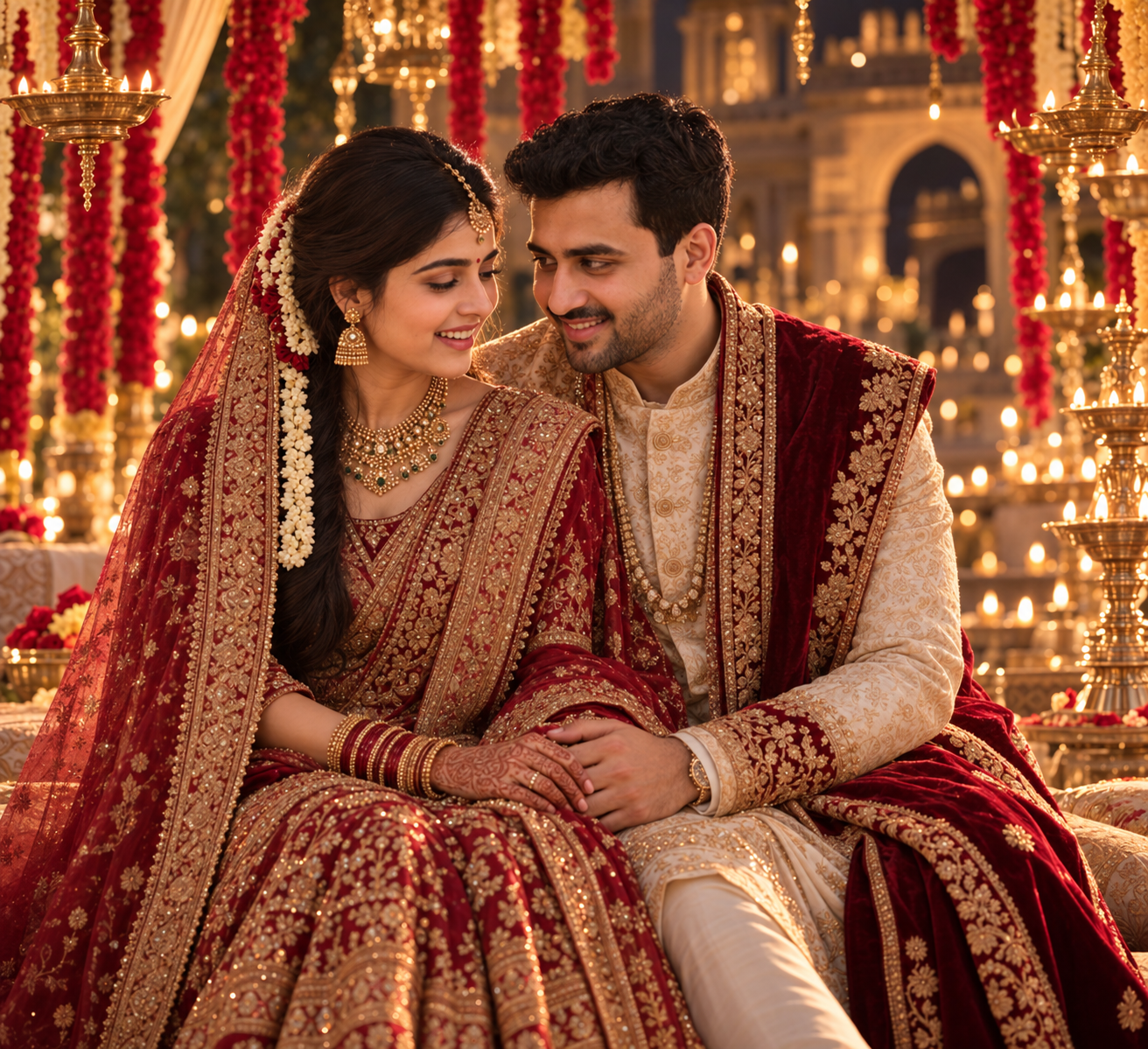
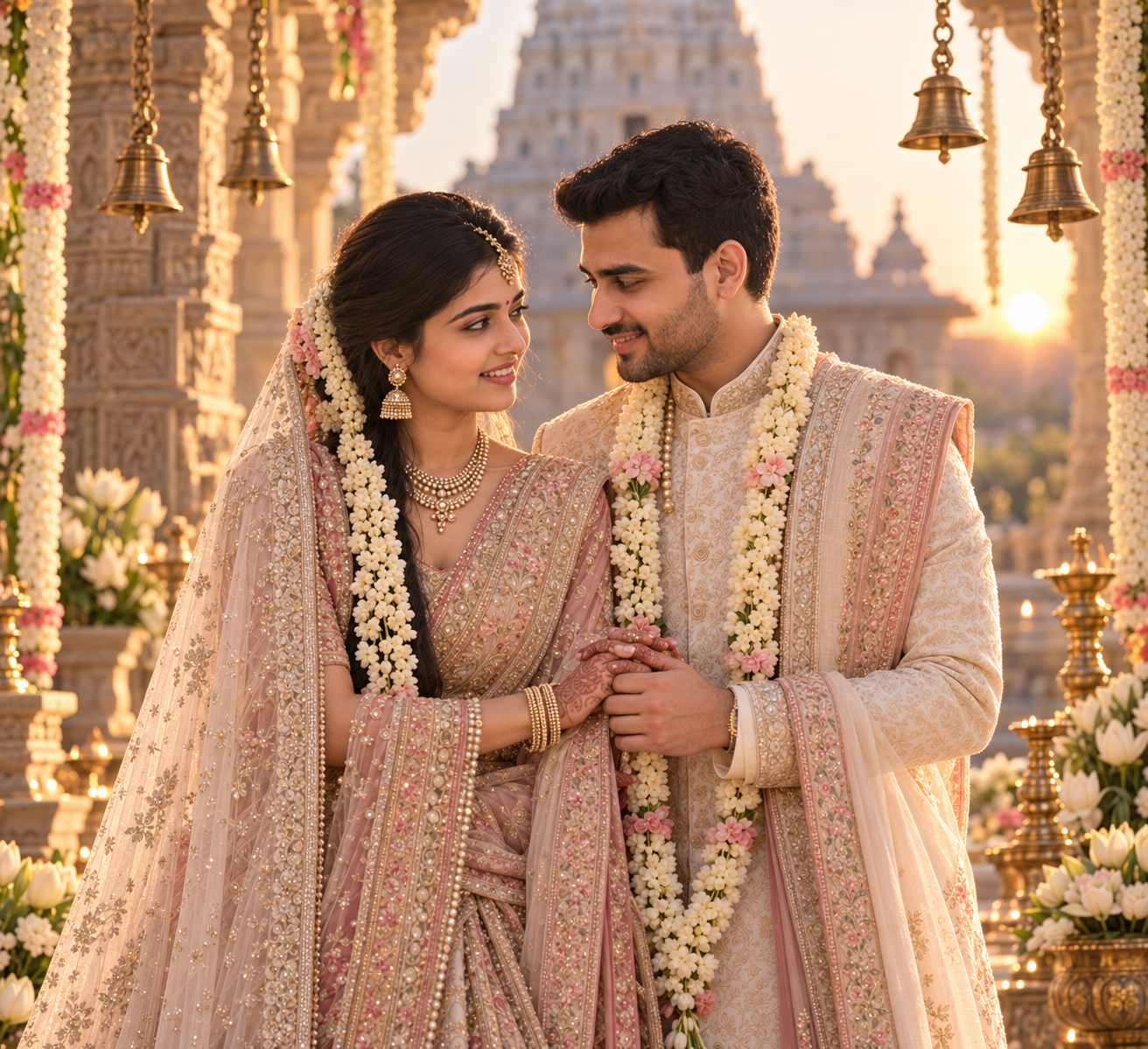
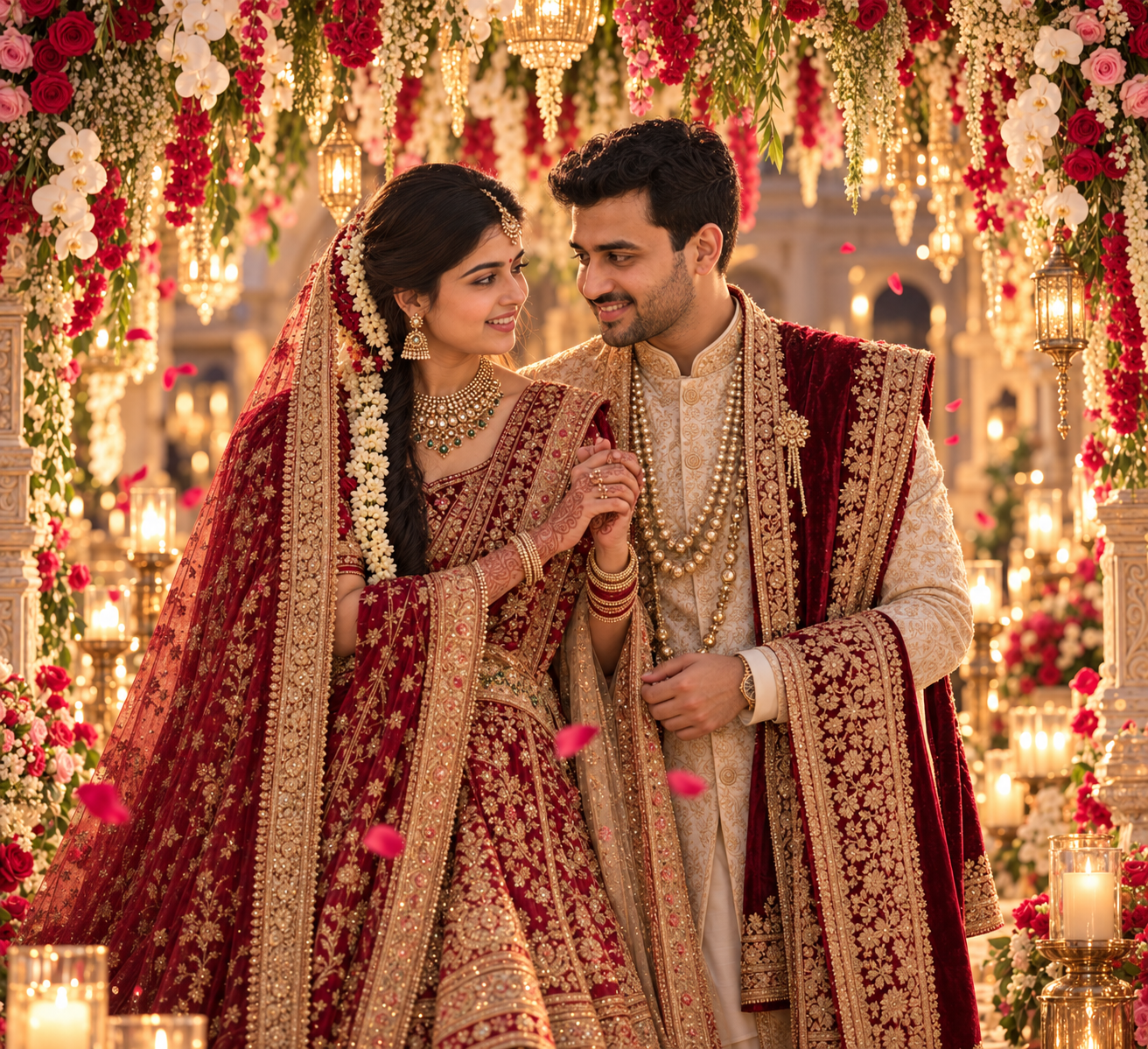
Create an opulent, editorial-quality wedding portrait of the couple standing together beneath a lavishly decked floral mandap, shot in the poignant moments just after their ceremony, using the uploaded reference photos as the final likeness guide.
Identity and Likeness
Maintain each partner's unique characteristics, skin tone, dimensions, and facial structure exactly as they appear in the reference images. The finished image must be instantly identifiable as them; do not idealize, modify, or generalize their appearance.
Clothes & Fashion
Wear matched traditional wedding clothing for both spouses, complete with layered fabric textures, elaborate handcrafted embroidery, and elegant, culturally acceptable jewelry that goes well with their skin tones and the mandap's color scheme. Clothes should feel custom-made and upscale, with obvious artistry in the drape, decoration, and stitching.
Pose and Composition
Place the pair side by side, standing close to each other, their hands clasped together in a casual, loving grasp. In spite of the formal backdrop, have them turn slightly to face each other and exchange a gentle, sincere look that is full of warmth and joy. It should not be rigid or posed. A clear focal hierarchy on the couple, balanced negative space, and a beautiful rule-of-thirds placement beneath the mandap's central arch are all examples of premium editorial composition standards.
Setting and Setting Clothes
Encircle the couple with a profusion of fresh flowers (marigolds, roses, jasmine, or similar) weaved through the mandap structure, warm pools of light cast by hanging ornamental lamps, and subtle flickering candlelight distributed throughout the background. Fire, ritual objects, and seats are examples of ceremonial elements that should be subtly blurred in the background to convey depth without detracting from the pair.
Lighting and Lens
Warm, golden cinematic lighting that evokes a dusk or lamplight atmosphere should be used to light the scene. The shallow depth of field, slightly compressed perspective, and creamy background bokeh that isolates the pair as the obvious subject are all characteristics of an 85mm portrait lens.
Realism and Texture
Skin should be rendered with realistic light falloff, gentle warmth, and authentic pores. Realistically depict the weight, shine, and embroidered details of textiles; silk should absorb light differently than cotton or brocade. Throughout, avoid blown-out light sources or crushed blacks by maintaining balanced highlights and shadow detail.
Tone and Mood
The finished product should be a timeless, heirloom-quality portrait that captures intimacy amid grandeur, feeling magnificent, romantic, and subtly joyous.
Technical Details
- Aspect ratio: 4:5 or 3:4 (suitable for editorial print, portrait orientation)
- Style reference: premium editorial magazine aesthetic, fine-art wedding photos
- High resolution, photorealistic results with no discernible AI artifacts and no warped hands or face characteristics