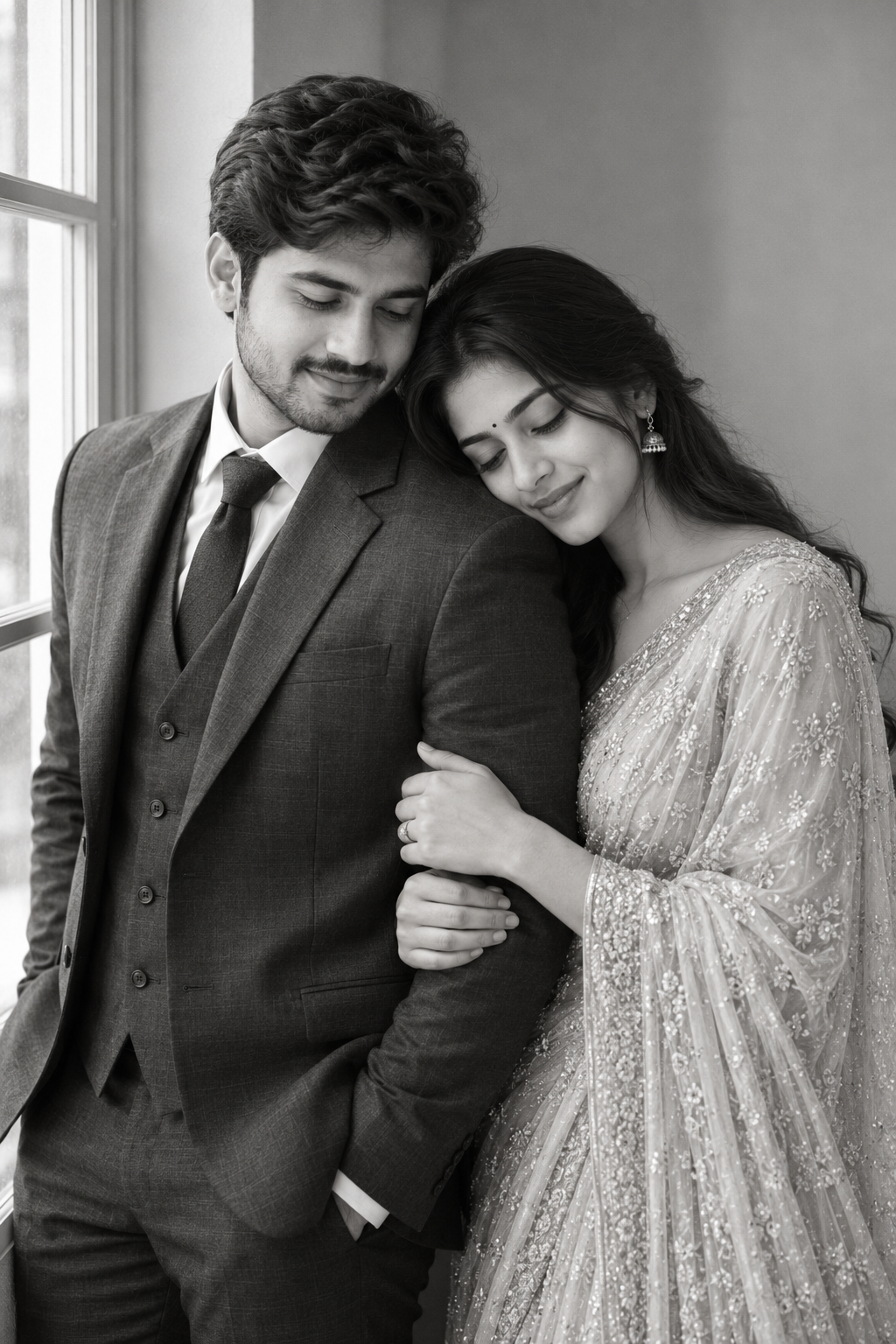
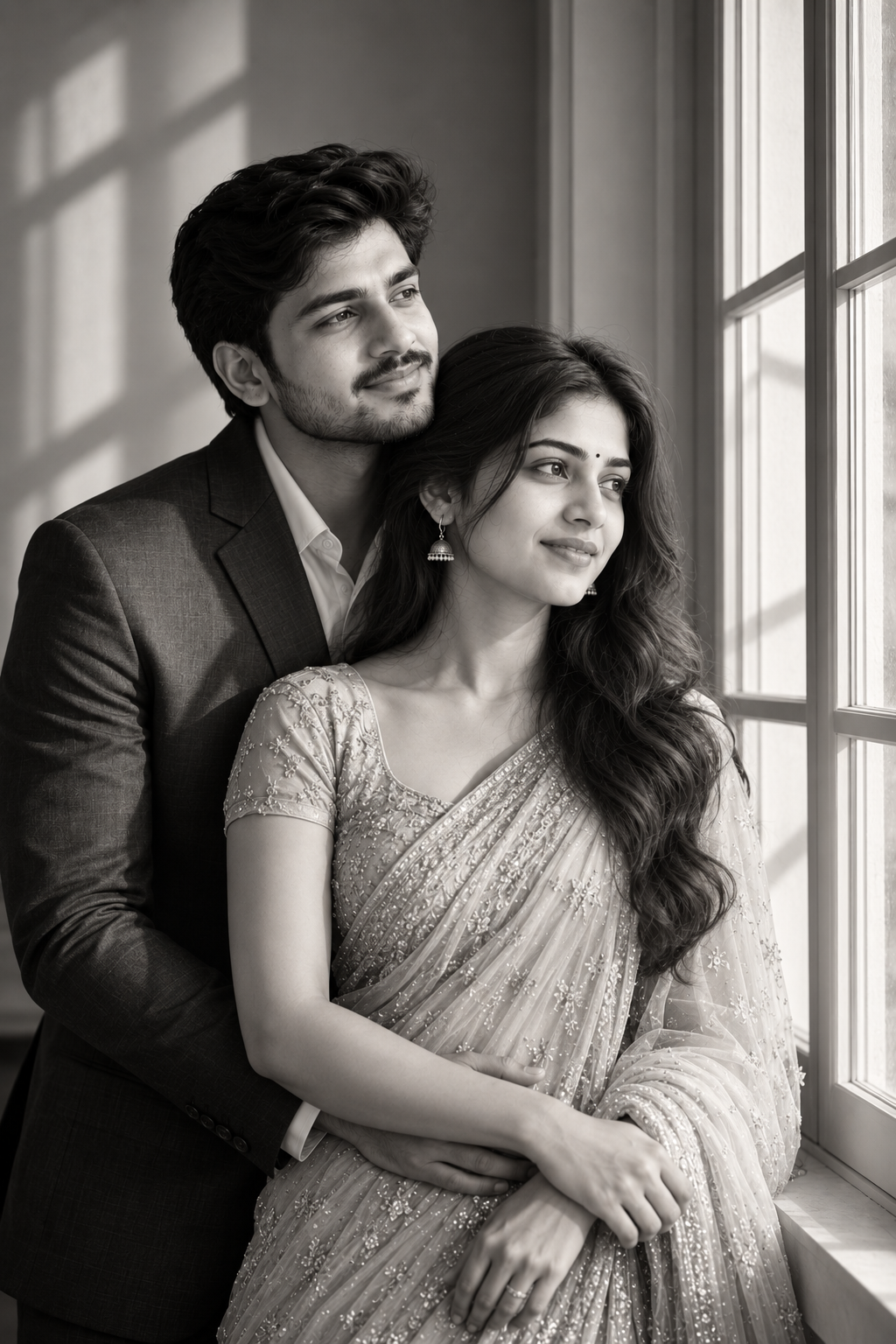
Windowlight Vows: A Monochrome Fine-Art Wedding Portrait

Prompt template

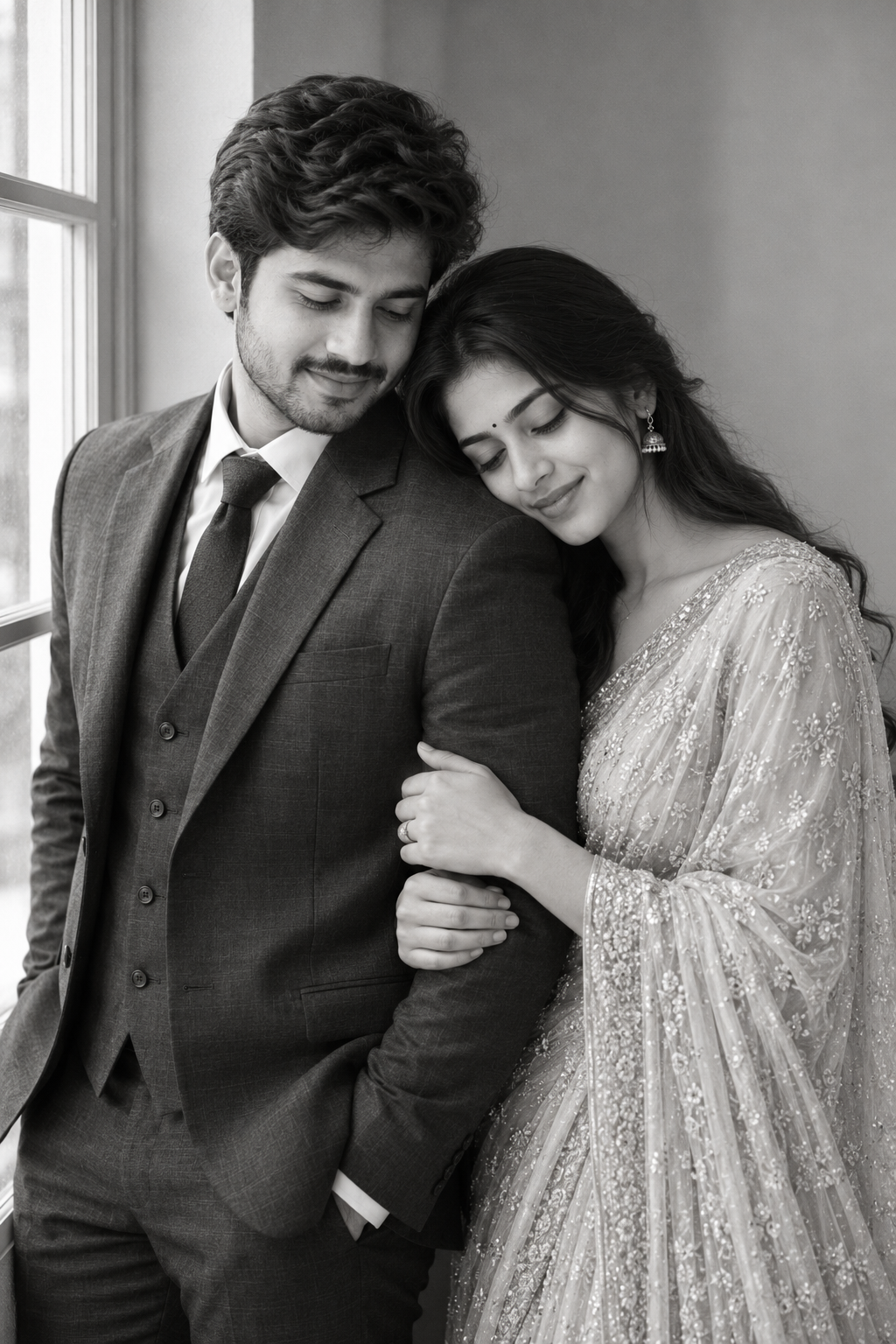
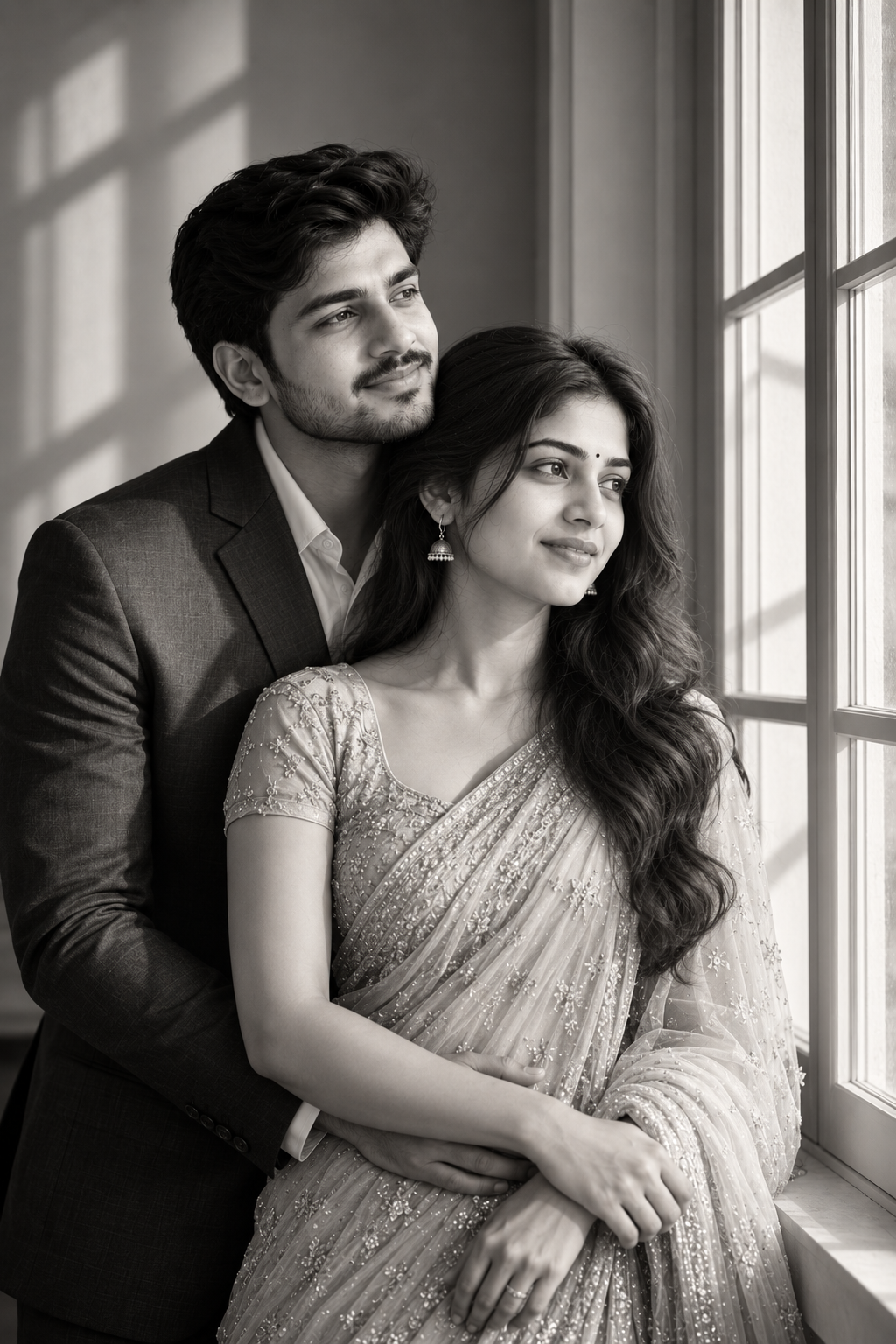
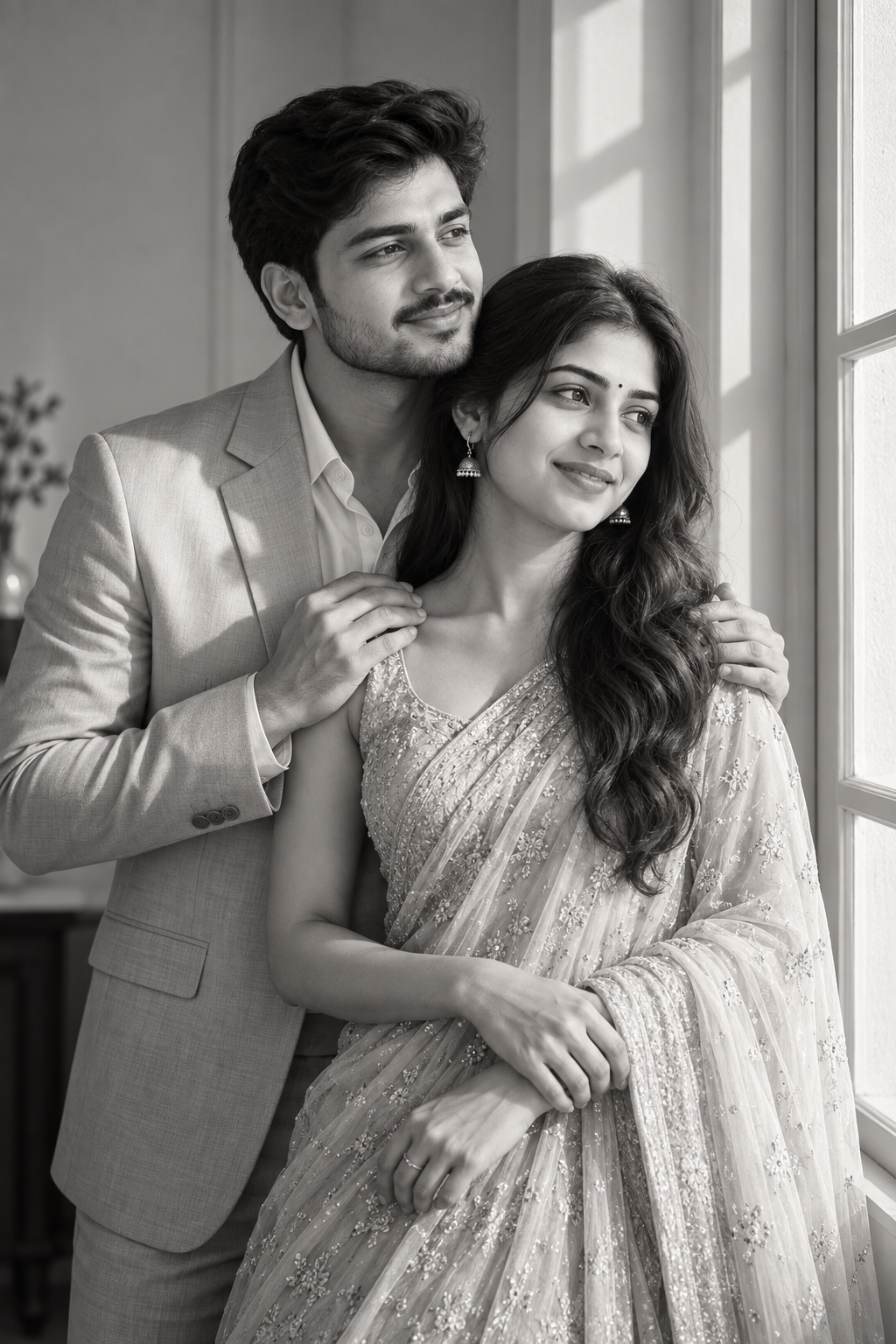
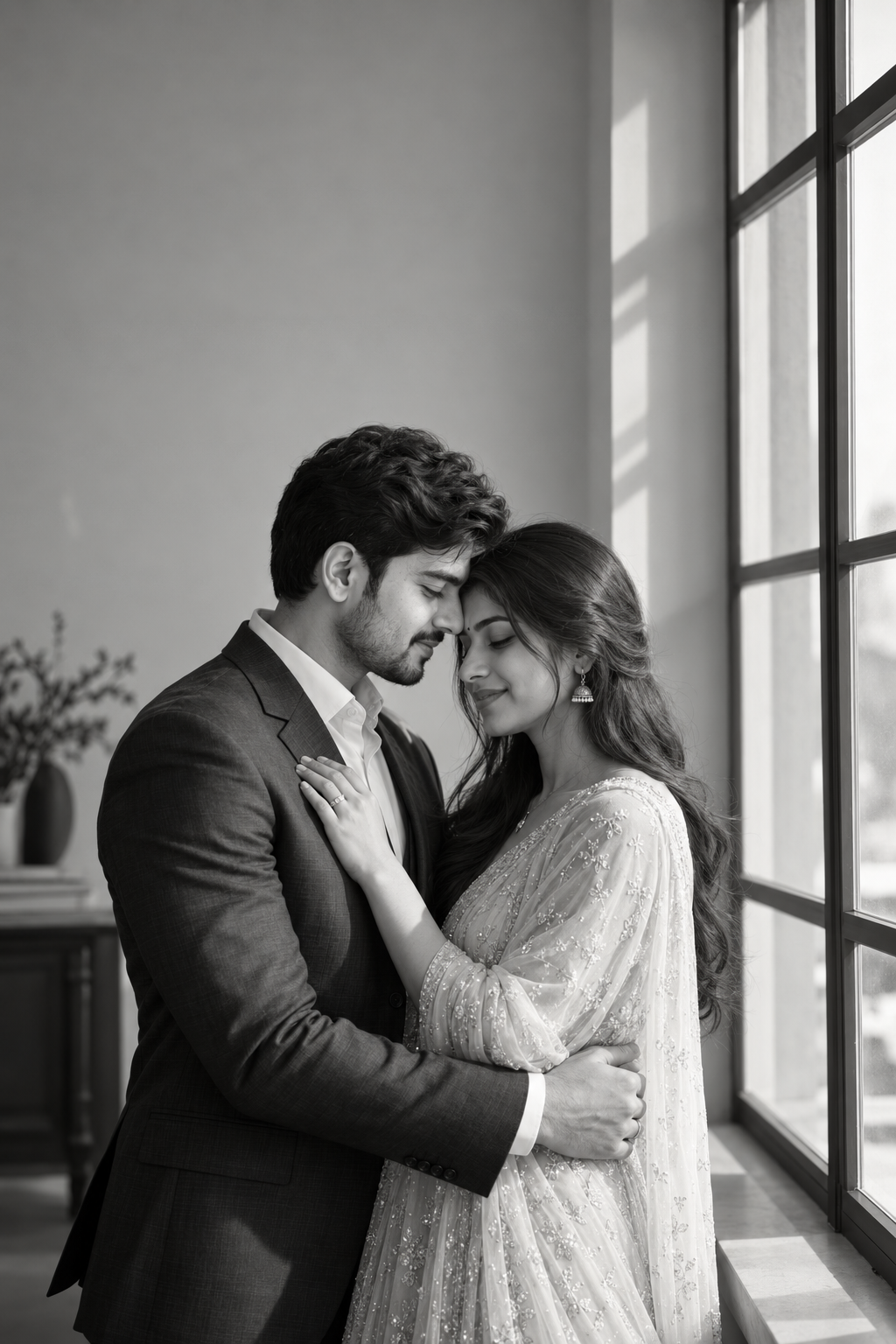
Create a single, monochromatic, fine-art wedding portrait from the provided couple photos. Don't idealize, flatten, or generally smooth the faces; instead, maintain each person's actual facial structure, dimensions, and distinctive traits exactly as they are depicted in the references. To make the final product appear like real photography rather than a digital reproduction, maintain realistic skin texture, including natural pores, slight asymmetries, and gentle tone fluctuations.

Composition and Setting

The couple should be positioned next to a huge, plain window in a tasteful, minimalist setting with light-colored walls, uncluttered areas, and delicate architectural lines that blend in rather than overpower the subjects. With their arms in a subtle, organic embrace, one partner stands just behind and to the side of the other; it is intimate yet restrained, never dramatic or posed. There is a reflective, open atmosphere as both people look out the window and the light outside rather than into the lens. Use traditional portraiture techniques to compose the frame: a clean horizon or vertical anchor from the window frame, balanced negative space, and a little off-center placement of the subjects to provide visual breathing room.

Lighting

Make the main source of illumination a single-source directed window light that falls organically across the couple's shoulders and faces. On the far side of the picture, let shadows fall deep and rich, but do not crush blacks; instead, keep visible detail inside them. Create sophisticated, flowing tonal gradients between highlight and shadow to mimic how natural sunshine fades through glass.

Lens and Style of Rendering

Render with natural perspective, mild background separation, and no distortion as if it were taken with a 50mm lens at a moderate aperture. Complete the picture with a full tonal range in fine-art black-and-white: bright yet unclipped whites, deep but detailed blacks, and a gentle, cinematic gradation in between that is evocative of medium-format analog wedding photography.

Emotional and Textural Emphasis

Place more emphasis on calm closeness and emotional connection than on the space's surroundings; the room should feel present but secondary. Highlight the couple's delicate, honest, and unguarded faces, the way light and silhouette interact with their shapes, and the tactile qualities of the fabric, such as the weight and drape of a gown or the texture of a shirt collar or suit lapel, all of which are depicted with tactile, almost sculptural clarity.

Overall Visual Appeal

The finished picture should have a timeless, emotionally impactful, gallery-worthy quality that evokes the controlled elegance of professional analog wedding photography; it should feel less "styled" and more observed.
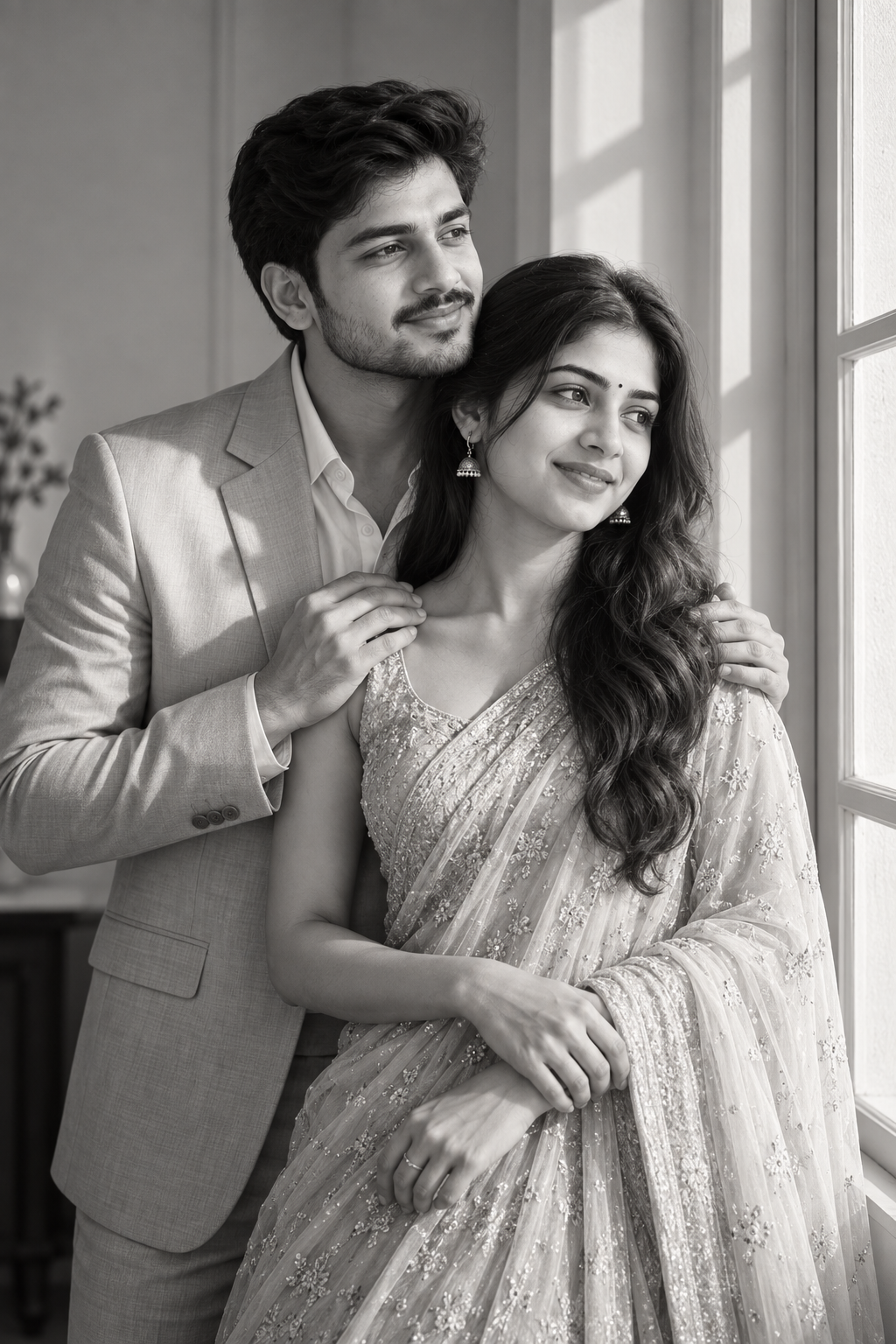
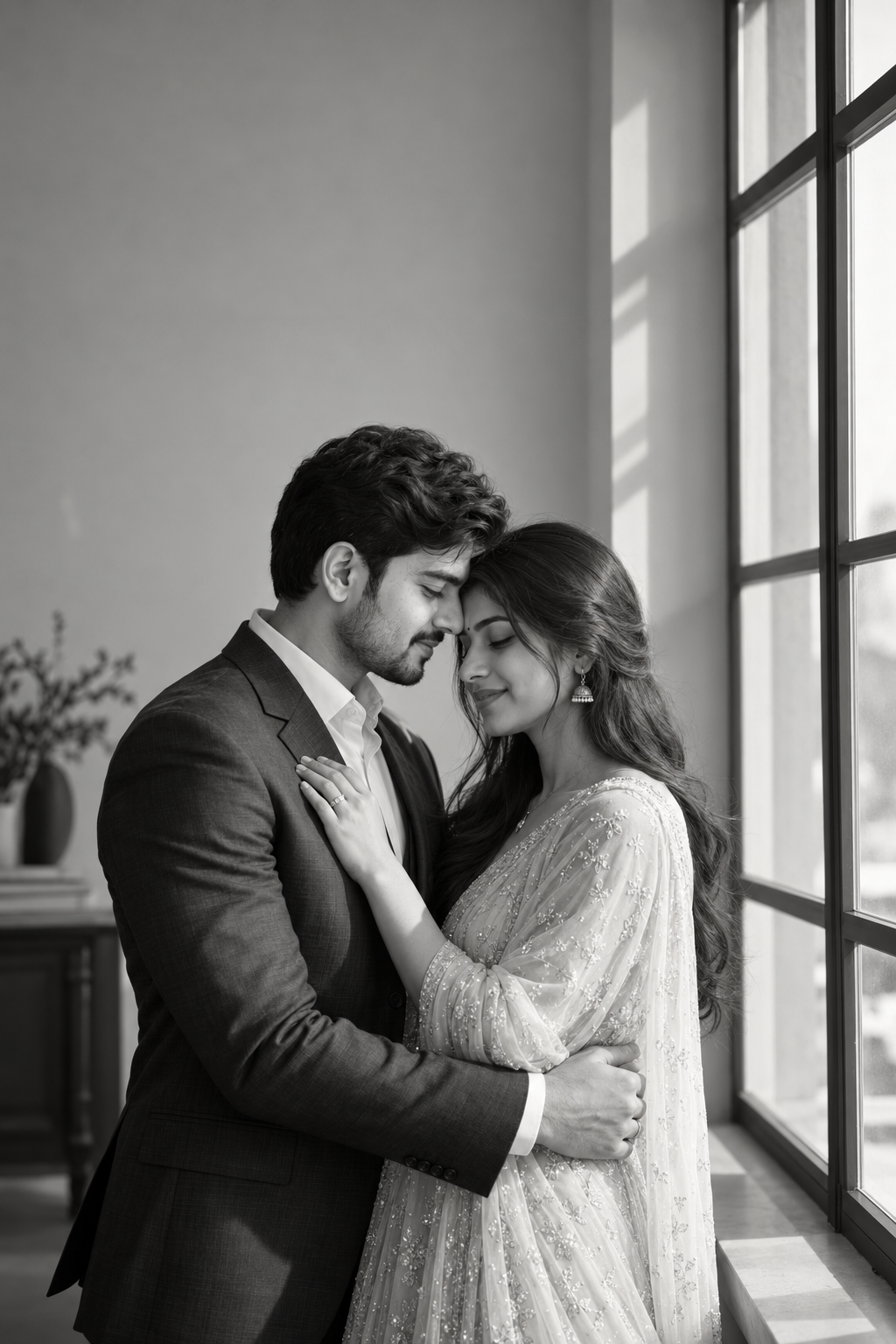
High quality image versions

Output image 1
Output image 2
Output image 3
Output image 4

Example prompts

Example 1

Create a monochromatic fine-art wedding portrait from the provided couple references while maintaining the precise facial structure and natural skin texture. Place them next to a tall window in a simple room with plain, white walls. With their hands lightly resting on each other's shoulders, the partner behind them tilts their faces at a three-quarter angle toward the window light, their eyes soft and unfocused on the middle distance. Make use of intense, focused window light that casts deep, detailed shadows on the collar and jawline. Using a 50mm lens perspective, a moderate depth of field, and a complete analog tone range, highlight how the gown's fabric drape catches light along its folds.

Example 2

Create a black-and-white fine-art portrait of the couple next to a huge window in a simple, tasteful home using the uploaded sources. There is a moment of shared silence as they stand close, their foreheads almost touching, their eyes closed, and they face the window rather than the camera. Maintain accurate skin depiction and genuine facial details. A sculptural shadow should be cast along the nose and cheekbone when light rakes across their profiles from one side. Make use of an understated composition with plenty of negative space above the subjects, a clean tonal gradient, and a 50mm classic portrait lens aesthetic.

Example 3

Create a classic black-and-white wedding photo using the uploaded references. Standing next to a simple window, both partners have their eyes lowered rather than looking outward, one tilted slightly inward, and the other's head resting close to their shoulder. Keep your skin's natural texture and face structure intact without using digital smoothing. Instead of using strong directionality, employ soft, diffused window light to create intricate, deep shadows. render with soft grain, a 50 mm lens appearance, and an emphasis on the two's peaceful emotional closeness rather than their surroundings.

Example 4

Using the supplied couple images, create a fine-art monochrome wedding portrait that is placed next to a huge window in a simple, tasteful space that is illuminated by early directed light. With their hands lightly resting at each other's waists, the partner behind takes a half-step back, and both of them look calmly and nonchalantly out the window. Maintain accurate facial likeness and realistic skin details. Create a deep, textured shadow and bright window highlights in a rich tonal gradient. Make use of the traditional 50 mm composition, giving more weight to the two people' emotional calm, delicate expression, and the interaction of fabric folds than to any room décor.

Instructions

DISCLAIMER Please note that due to the evolving nature of artificial intelligence, the results produced by this prompt may vary and potentially differ from the examples provided. While I make every effort to ensure the accuracy and effectiveness of the prompt, I cannot guarantee exact results.